
 Image 1 of 14
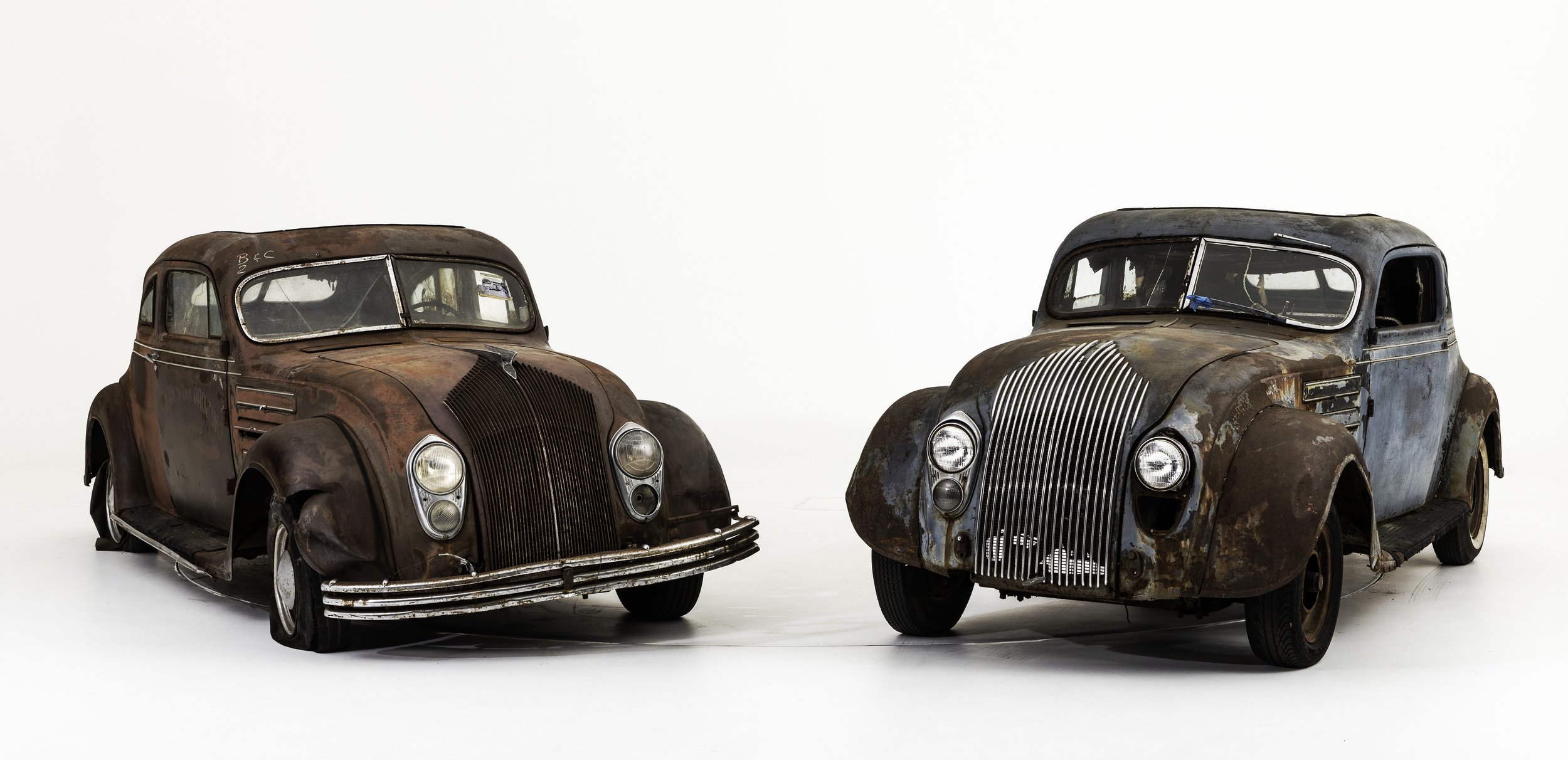 Image 2 of 14
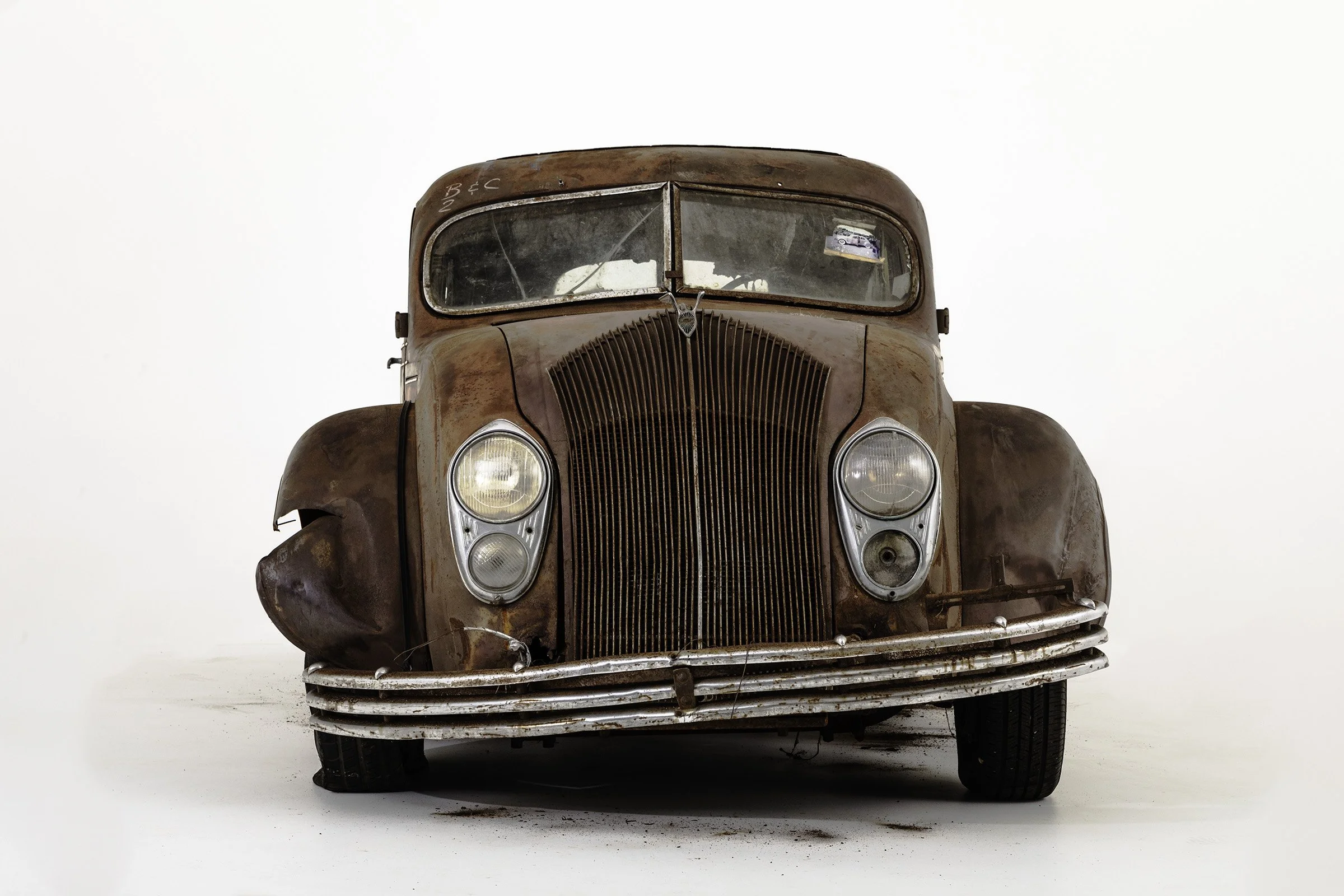 Image 3 of 14
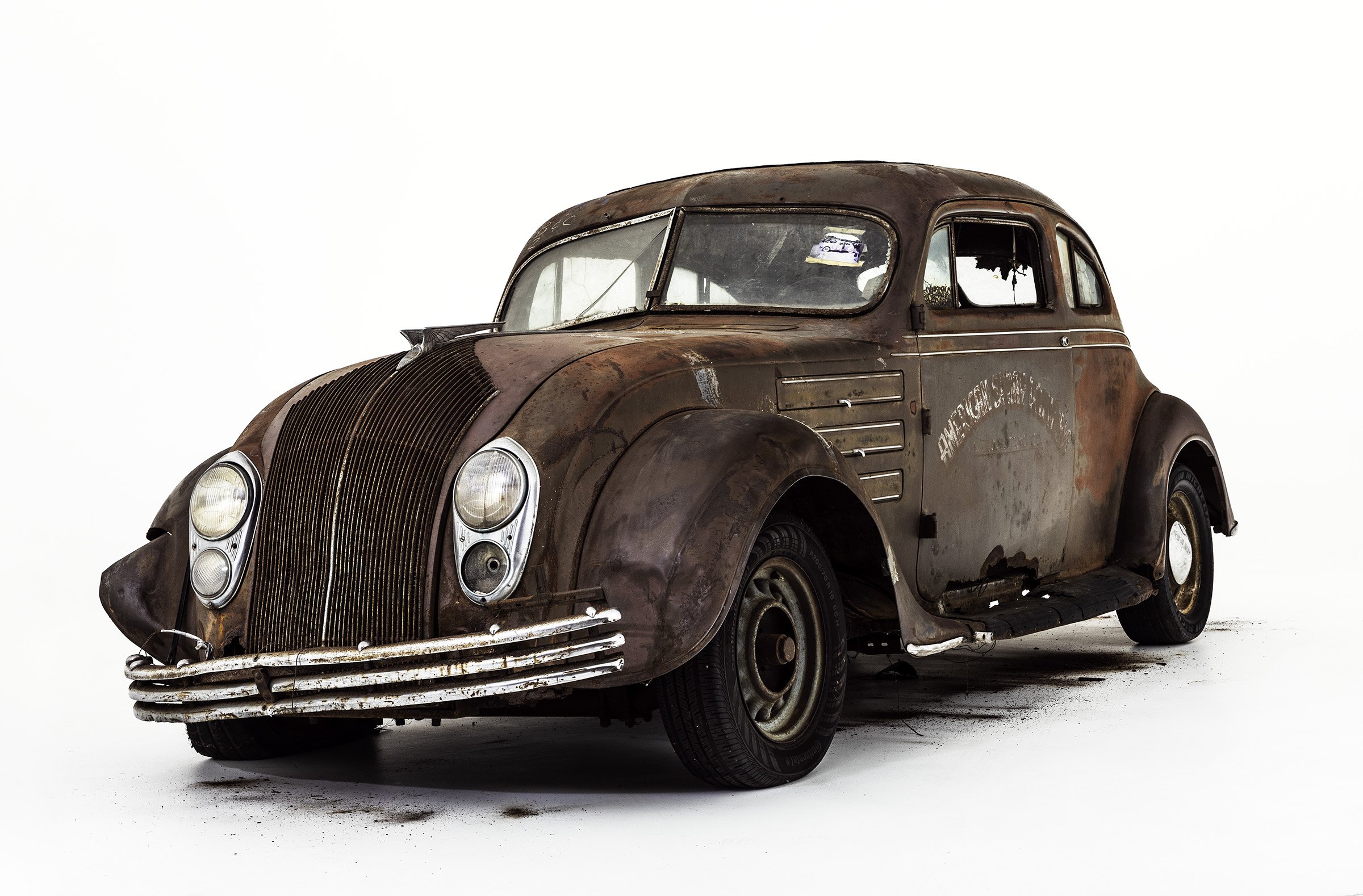 Image 4 of 14
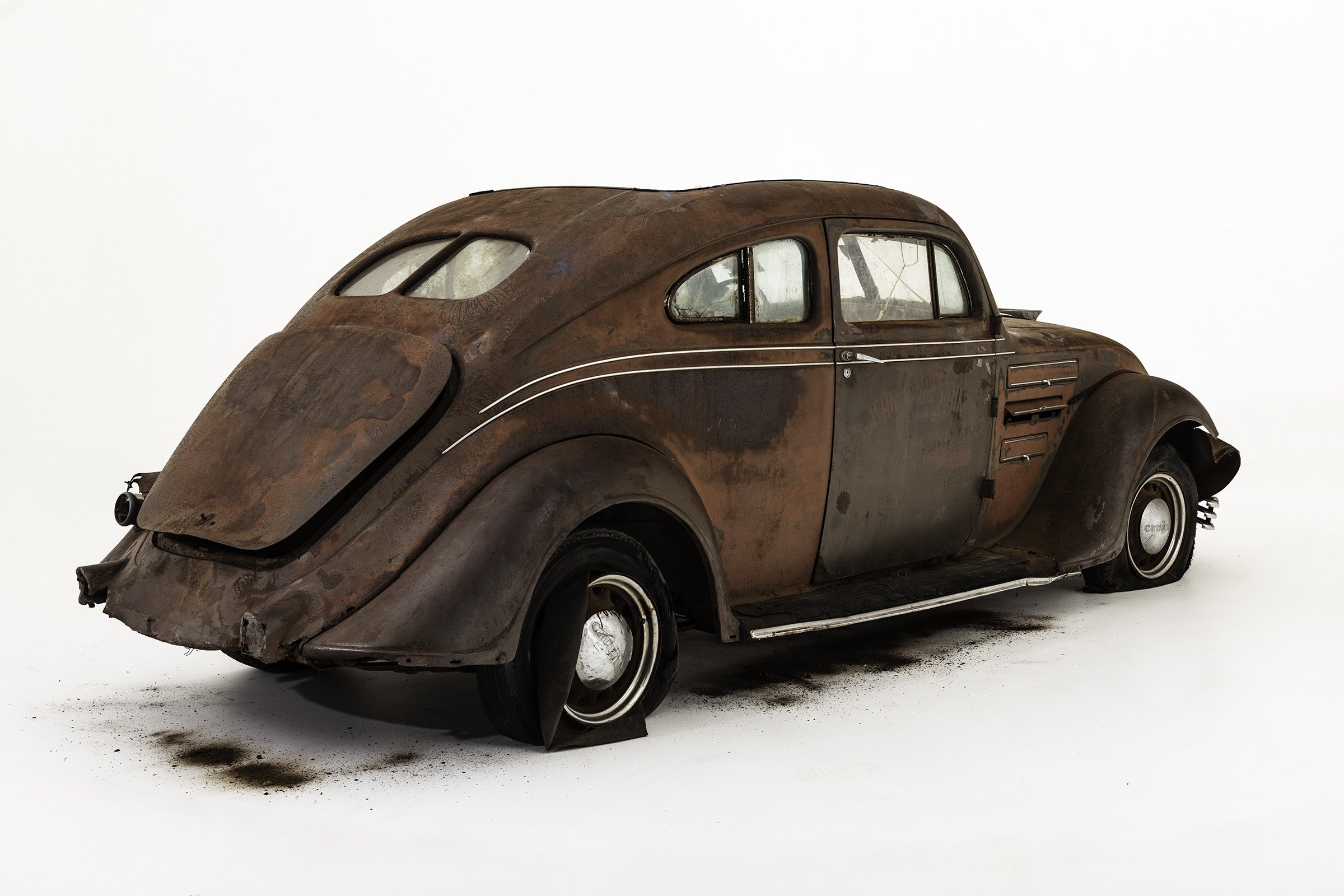 Image 5 of 14
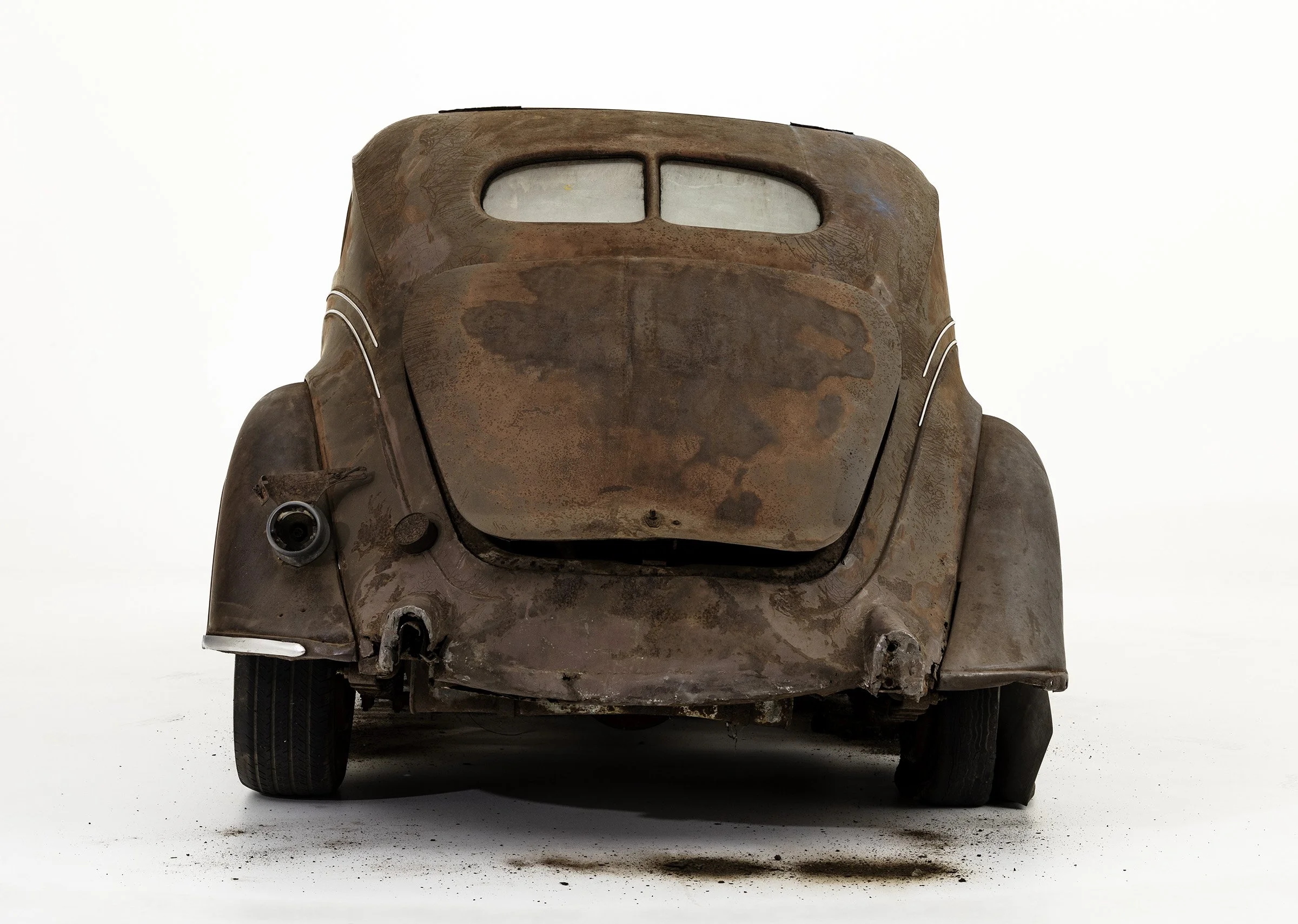 Image 6 of 14
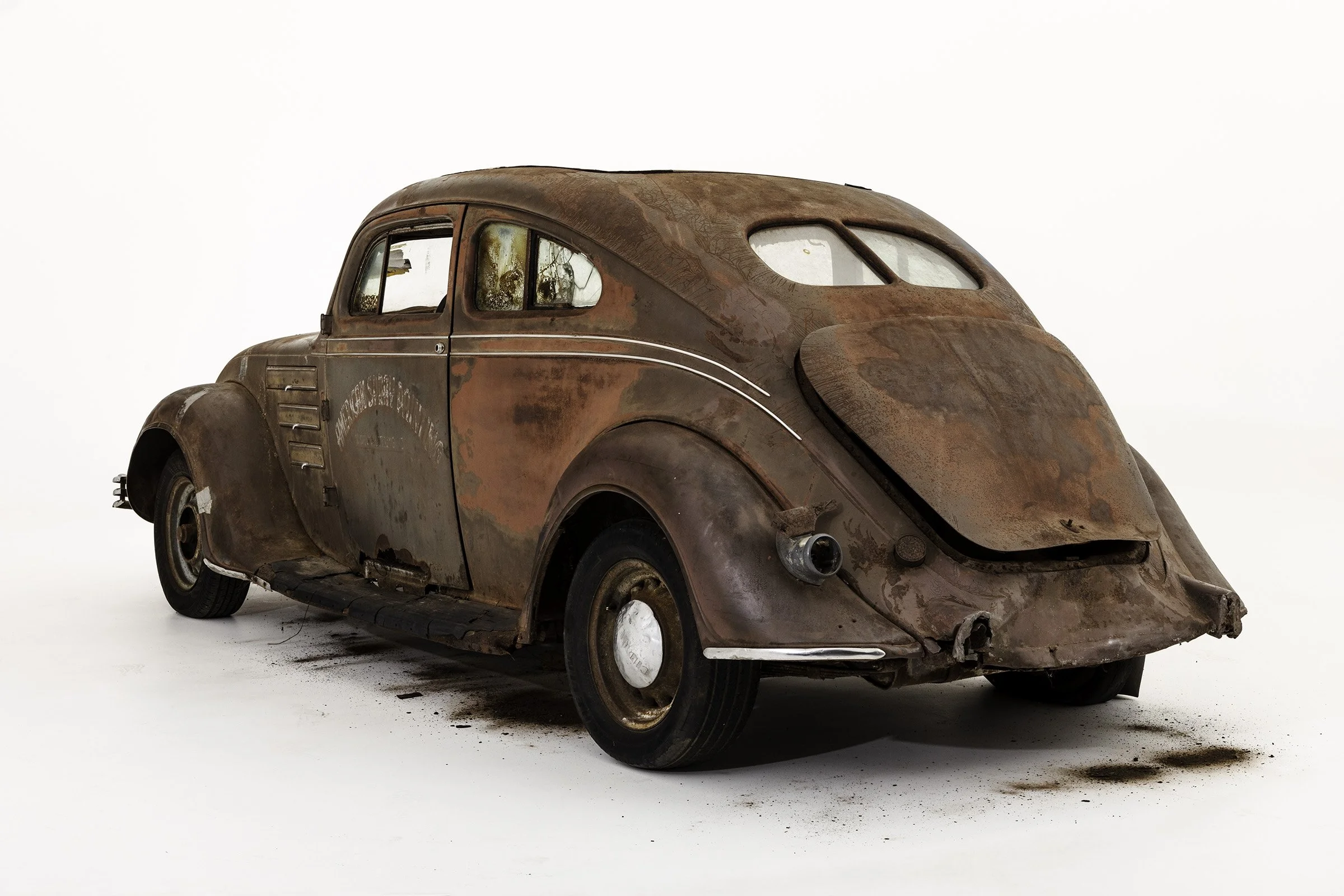 Image 7 of 14
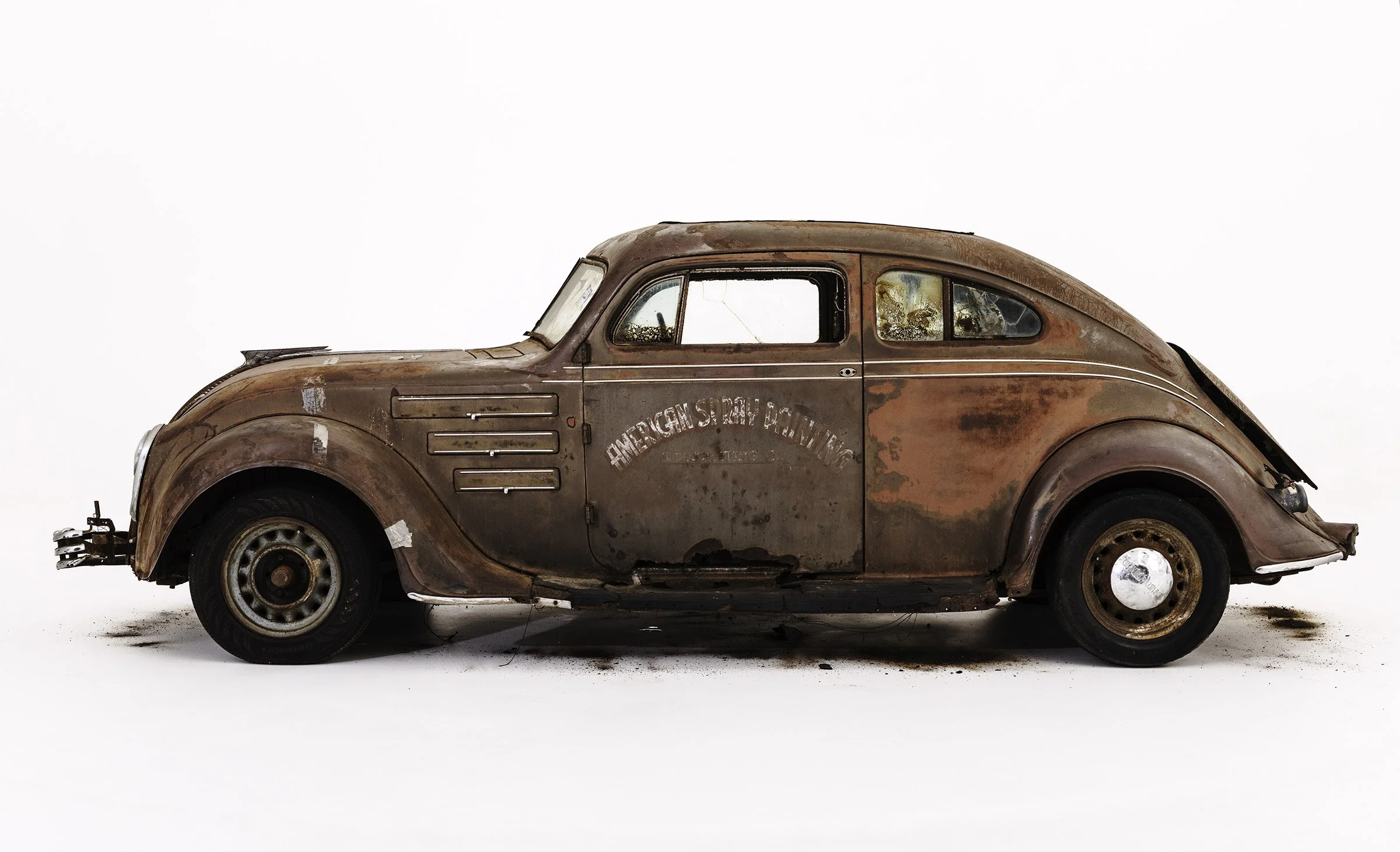 Image 8 of 14
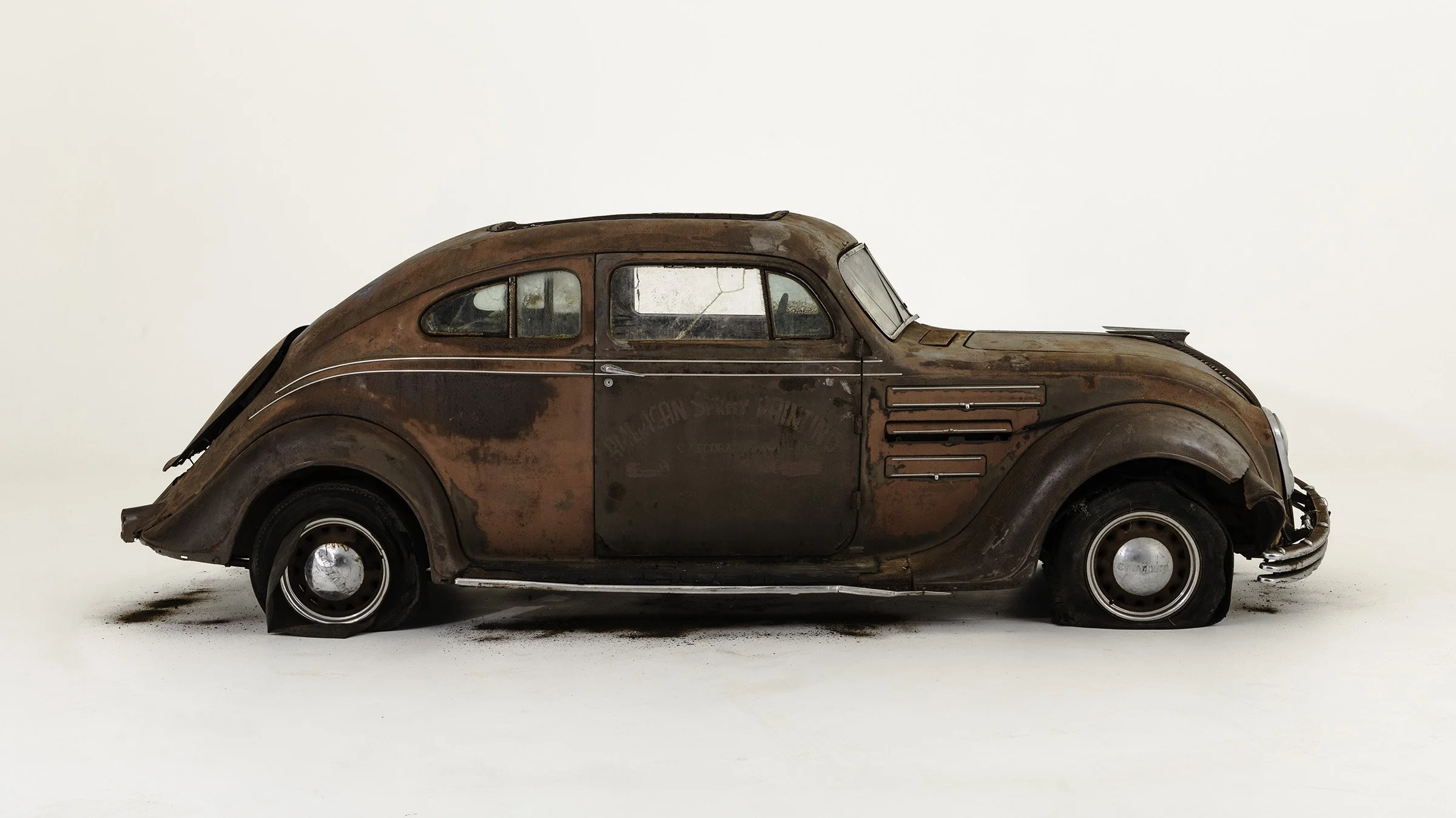 Image 9 of 14
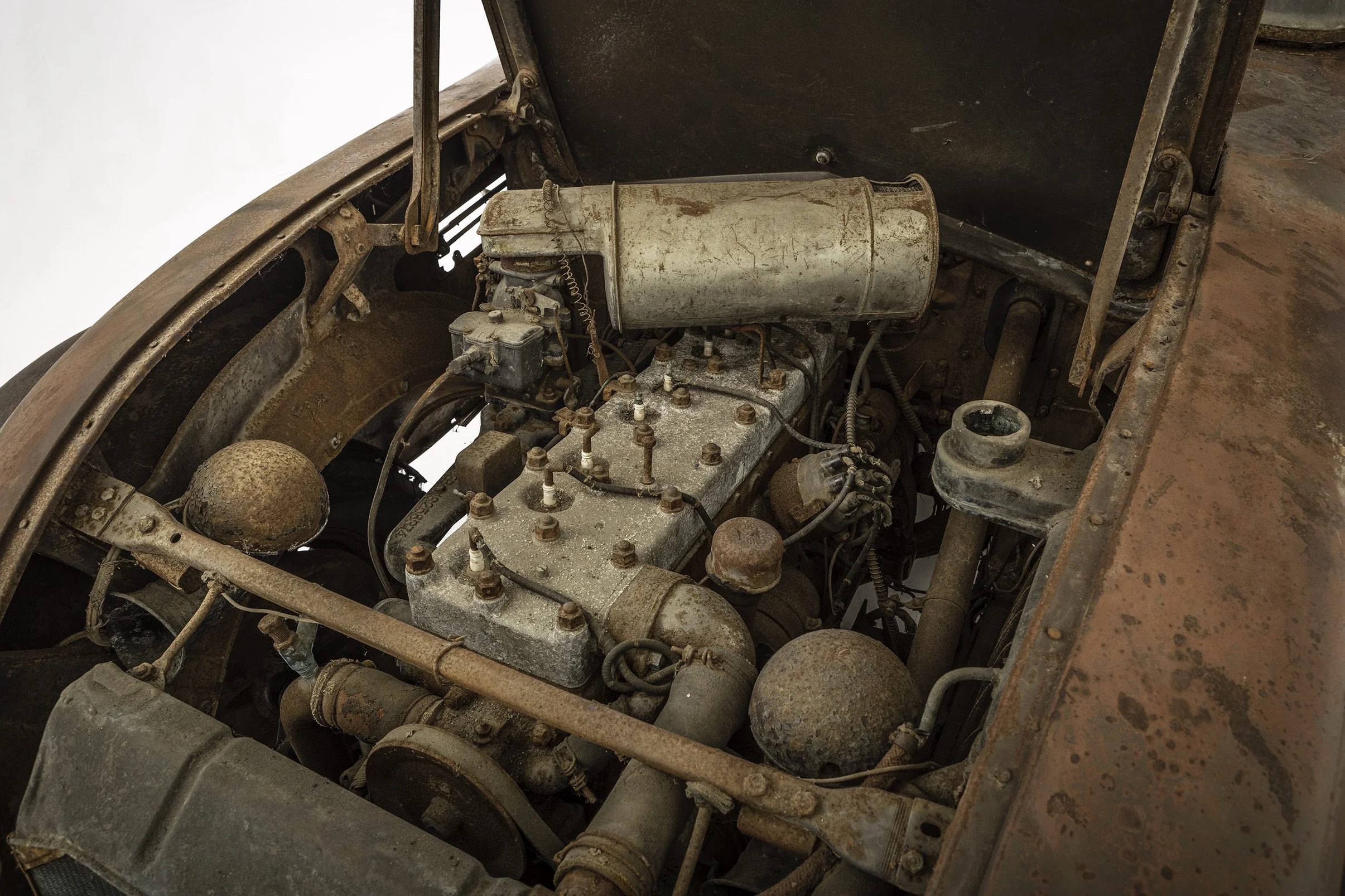 Image 10 of 14
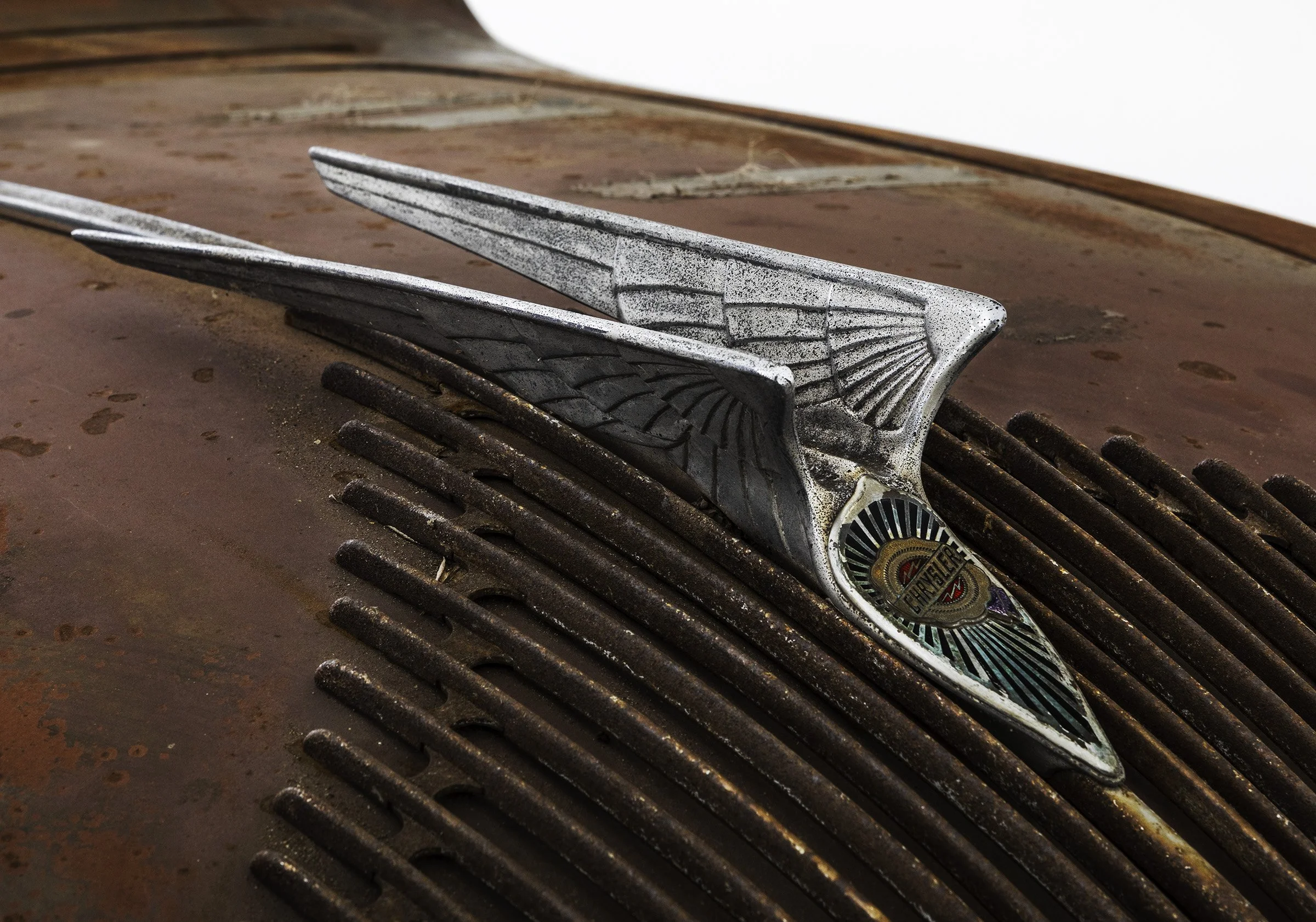 Image 11 of 14
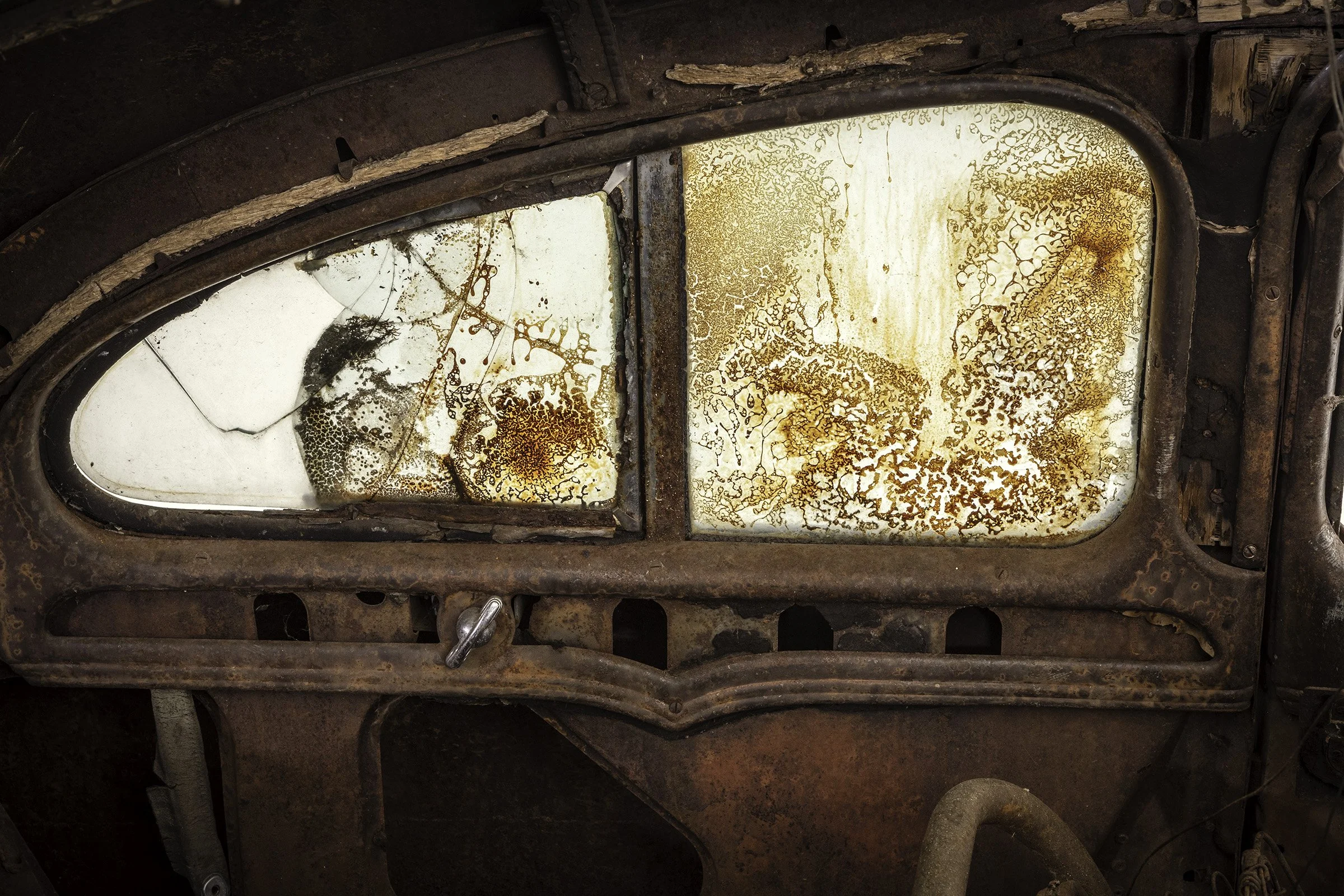 Image 12 of 14
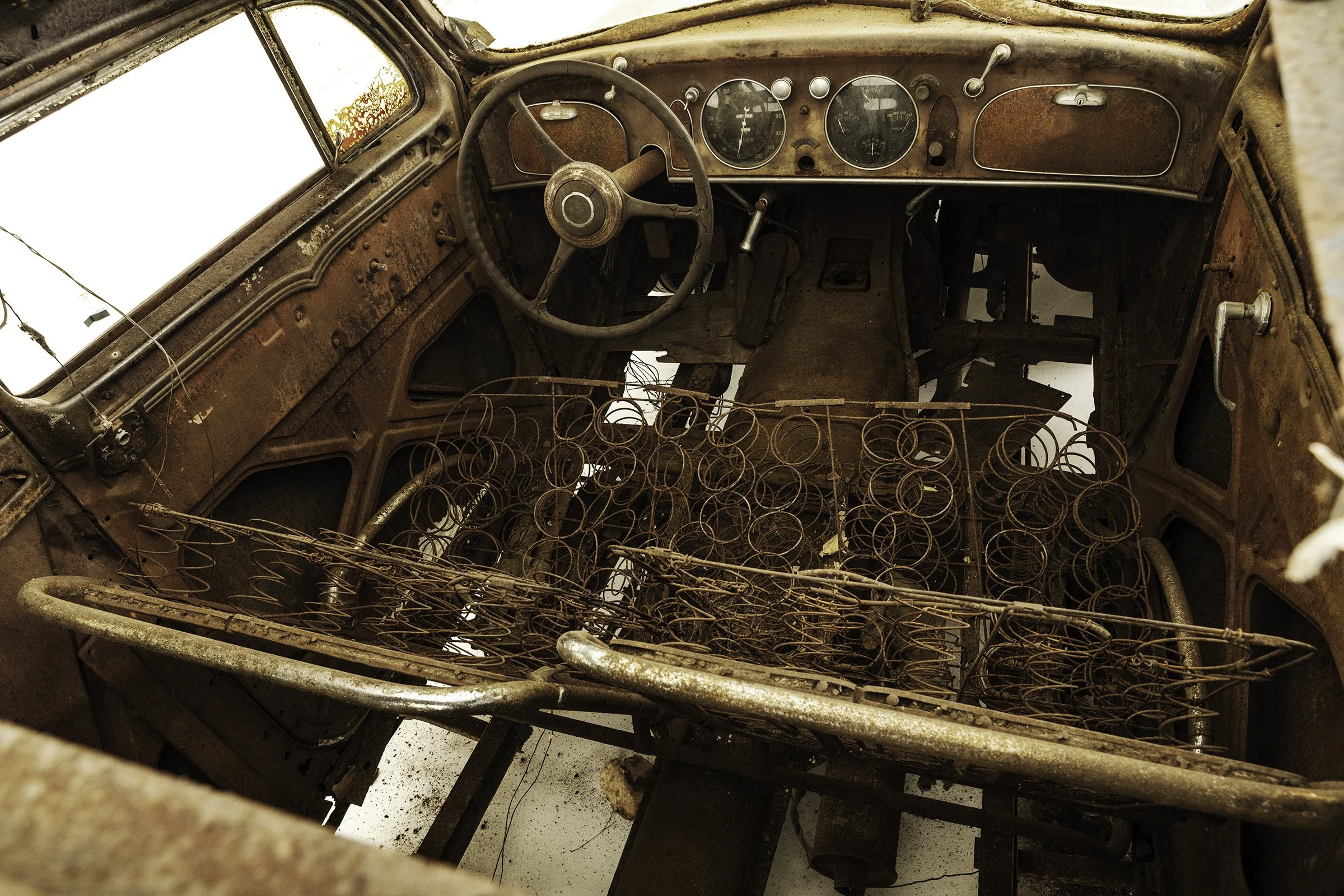 Image 13 of 14
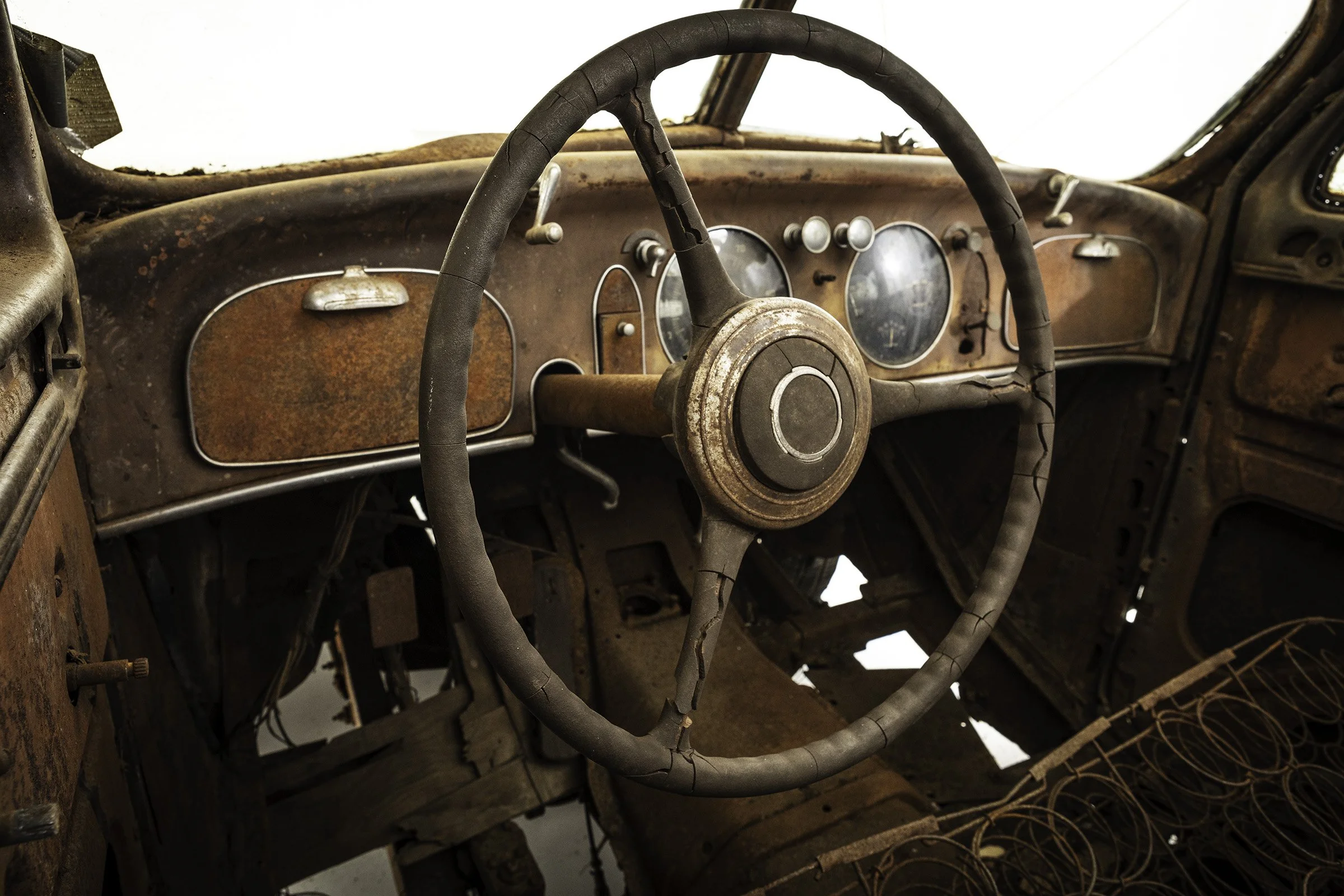 Image 14 of 14
-
The Chrysler Airflow was introduced in January 1934. The car was such a departure from conventional automobile design of the era it appeared as if an alien space ship had landed in Chrysler showrooms.The tear-drop inspired shape of the car, the headlights fared completely into the body and the grille more of a dressing attached to the the body envelope than a separate element, had never been seen before. Even the proportions, with the engine placed way out in front while the rear axle was very close to the rear bumper, was something new.
The design and construction of early automobiles was a carry over from the carriage trade. Even the names of the body styles are direct out of carriage names. By the late-1920s, some designers and engineers in the automobile industry were starting to move away from carriage heritage. An enlightened few began to take cues from the burgeoning aircraft industry and think about aerodynamics and its effects on efficiency and style.
The engineers Carl Breer, Owen Skelton, and Fred Zeder were affectionately known as the “Three Musketeers" when they worked at Studebaker. Walter Chrysler hand picked these men to be the heart of the engineering department when he started Chrysler Corporation in 1924. They were instrumental in making the cars that put Chrysler on the map.
Chrysler installed a wind tunnel at its highland park research center in the late 1920s and by spring of 1930 the Three-Musketeers had learned a lot about the impacts of aerodynamics on car design. They determined that the traditional “two-box” design, with the engine up front in a box and a body behind it in another box, was so aerodynamically inefficient that driving the car backward would make them better. They enlisted the help of no less than Orville Wright to determine the best shape for an automobile to enhance aerodynamics and improve ride and handling.
The result of this research was the Airflow. The tear-drop inspired shape was not only more aerodynamically efficient, it made use of unitized body construction for the first time in a volume production car. This method of car manufacturing incorporated the frame and the body, creating a single unit. This allowed the repackaging of the driveline and passenger seating areas to improve handling and maximize interior space. It also had the benefit of making the entire structure of the car stronger.
The Airflow was the first truly modern car, decades ahead of the rest of the industry. The design principles of aerodynamics and the engineering of unitized body structures are the norm today. Sadly, the public, while intrigued, was not moved to purchase the radical Airflow in great numbers. -
Company
Chrysler Corporation
Make
Chrysler
Model
Airflow, CU
Body Style
Coupe, 2-door, 5-pass.
Body ManufactureBriggs Manufacturing
Model year
1934
Wheelbase
122.8 inches
Length
NA
Engine
inline-8, L-head, 299 cid
Horsepower
122 hp @ 3400 rpm
Transmission
3-speed manual
Original Base Price
$1,345
Brand Production
36,091 model year
This Car Production
732 -
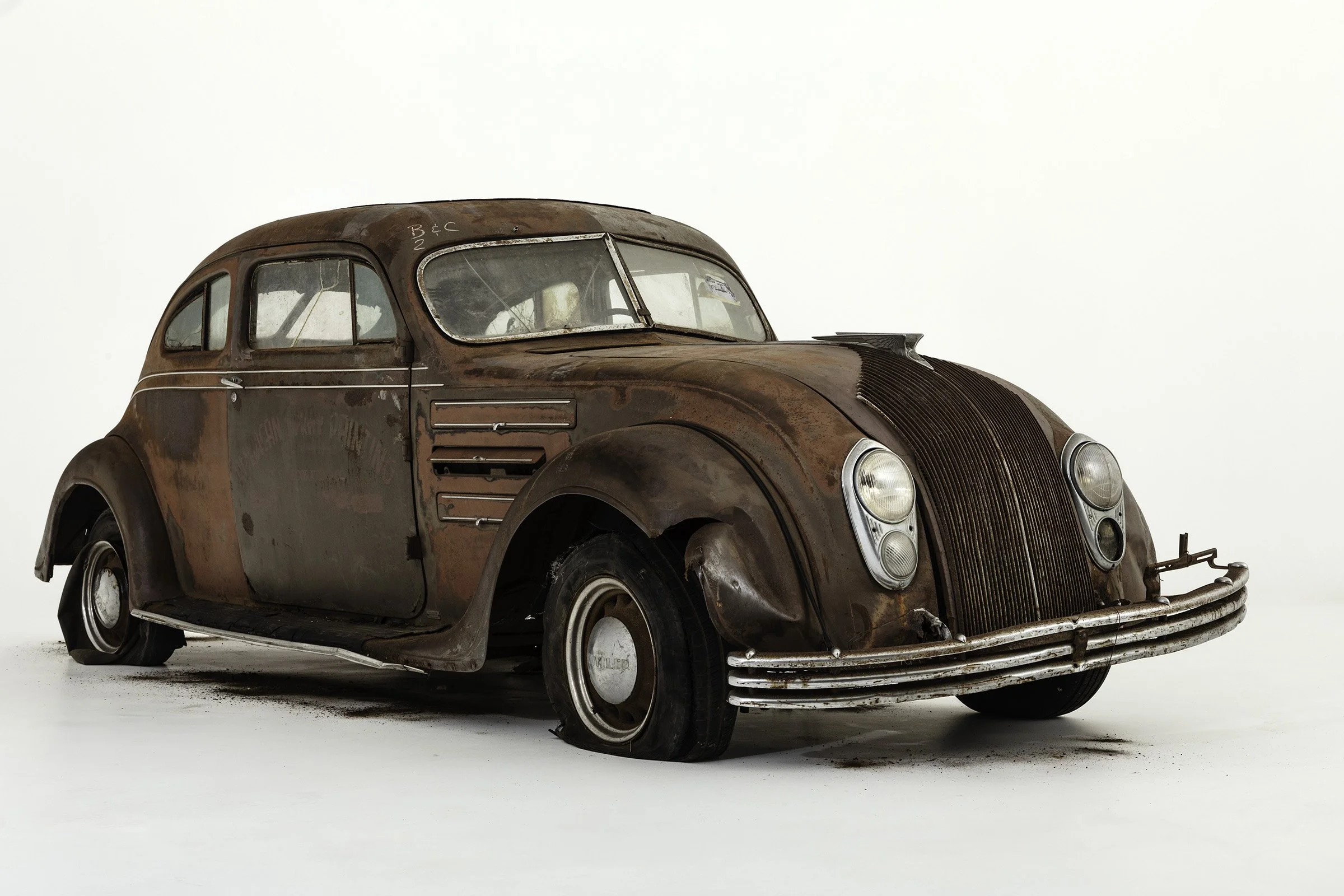
This pair of 1934 Chrysler CU coupes were purchased from a collector in the Bronx, New York. The cars came with a lot of spare parts but not enough to restore them. Parts were hunted down by the NB Center restoration staff.
According to the Airflow registry, 12 1934 Chrysler CU Airflow coupes are known to exist, including these. Rumours of more are constantly swirling on the Internet. It is estimated that 35 Chrysler Airflow coupes of all series and years are known to exist today.
These two cars represent a challenging restoration project. The floors are gone, the bottom of the doors are little more than lacy metal, the fenders are mangled, the bottom of the trunks are rotted. The interiors are little more than scraps. The restoration of the two cars began in 2025 and will take at least 3 years. Both cars will be restored side-by side.
Of the two cars, the brown one, is an early production example with a single piece cast grille. This style grille was replaced after less than six months of production in favor of a multi-part stamped stainless steel grille (as seen on the grey car) that was probably less expensive to produce.
Look for more on this restoration project on social media and here. Please come see the finished cars when they are ready for debut in 2028 or 2029.