
 Image 1 of 13
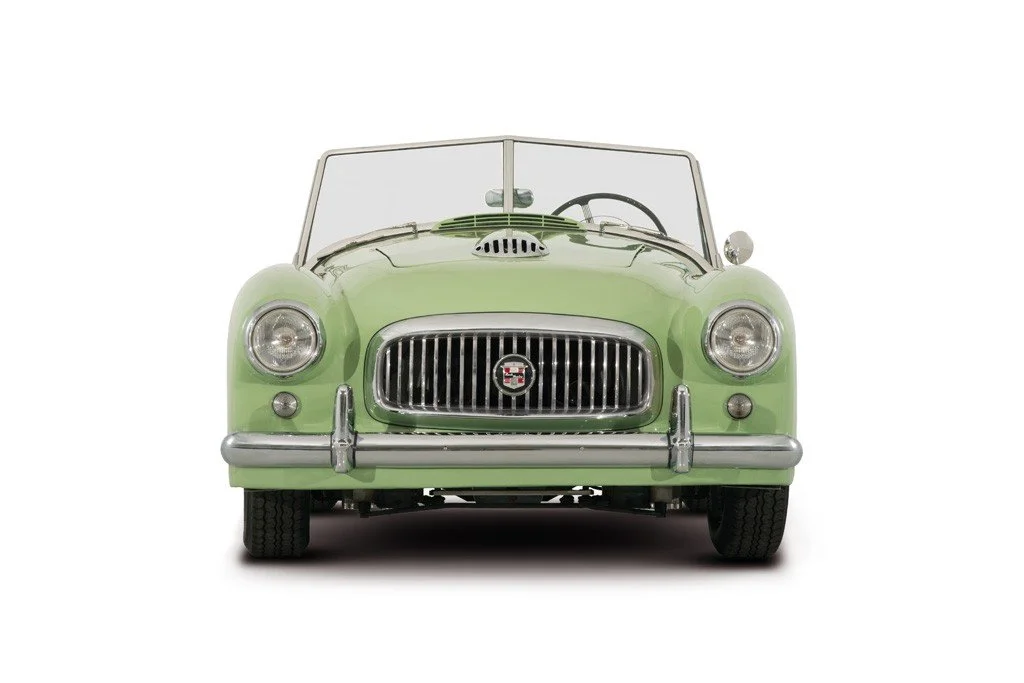 Image 2 of 13
 Image 3 of 13
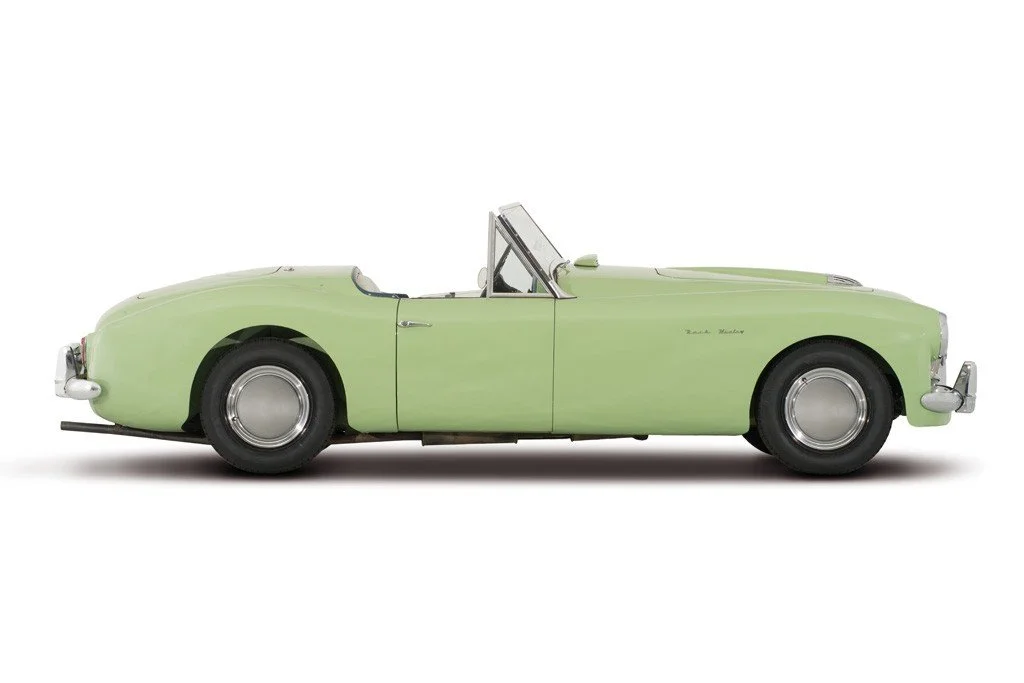 Image 4 of 13
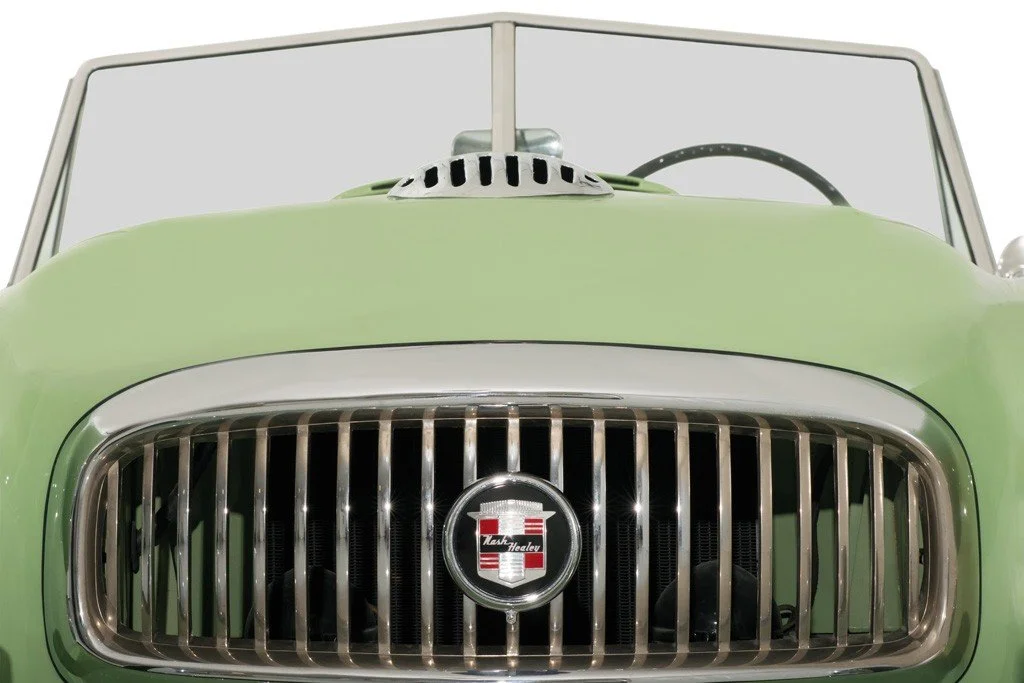 Image 5 of 13
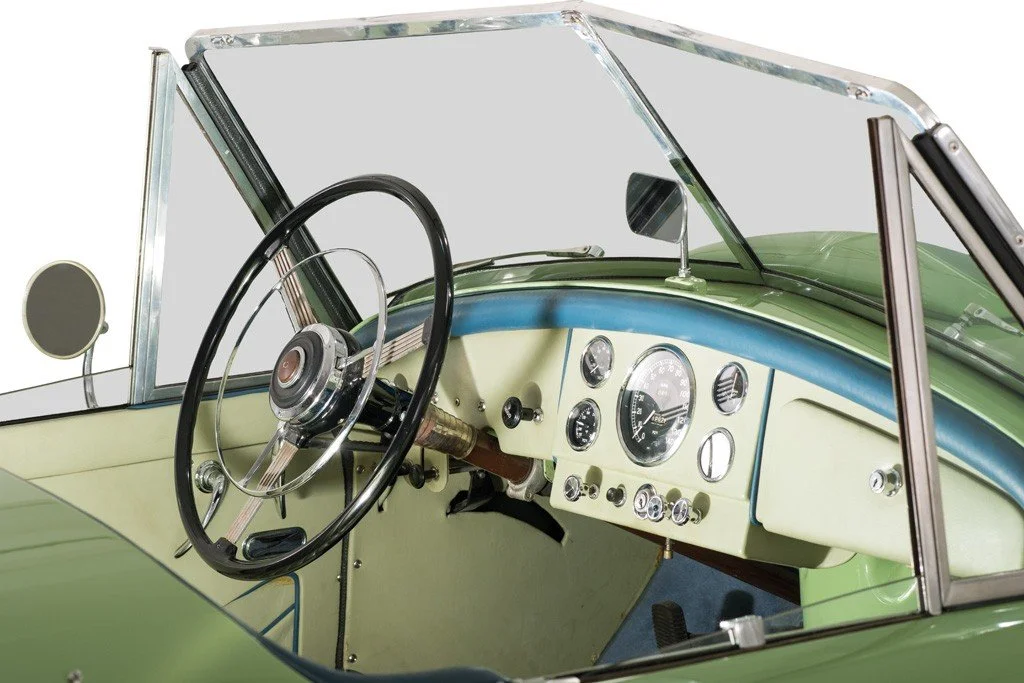 Image 6 of 13
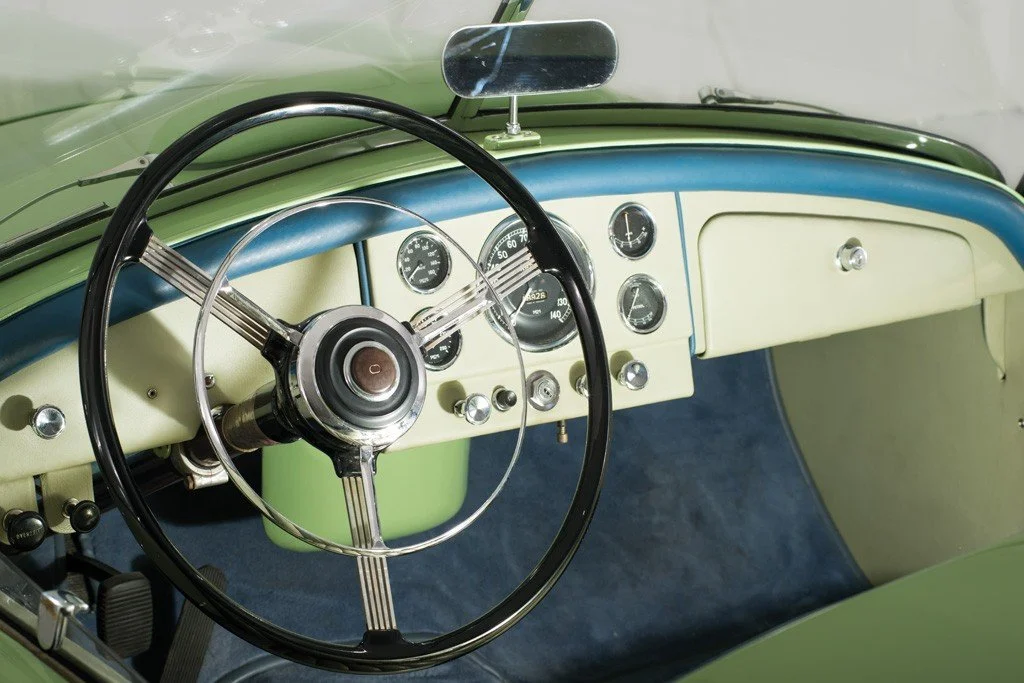 Image 7 of 13
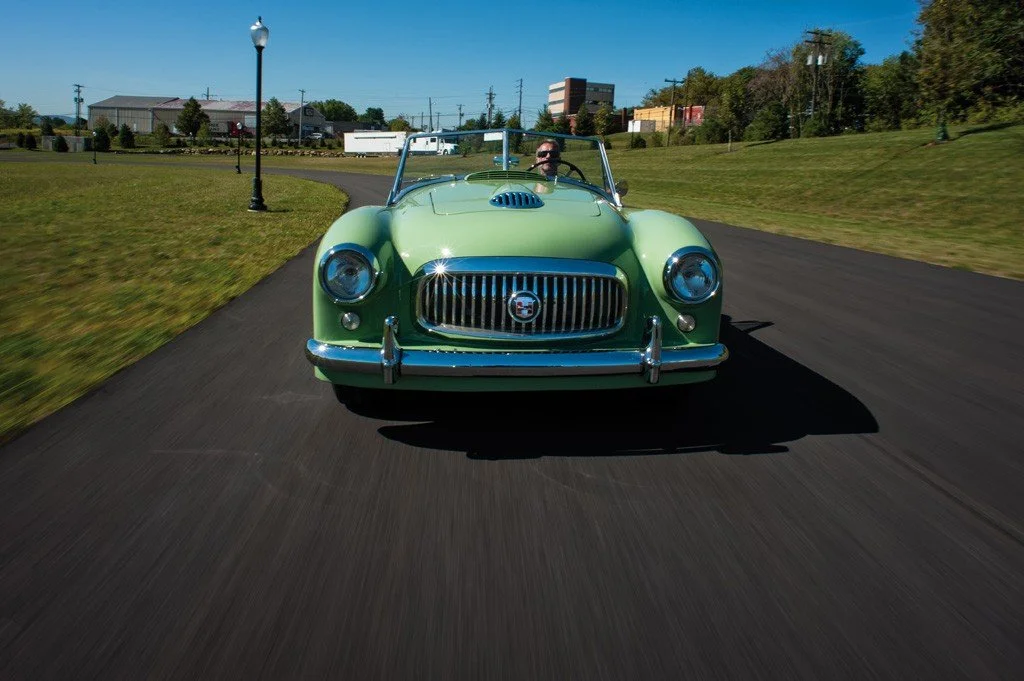 Image 8 of 13
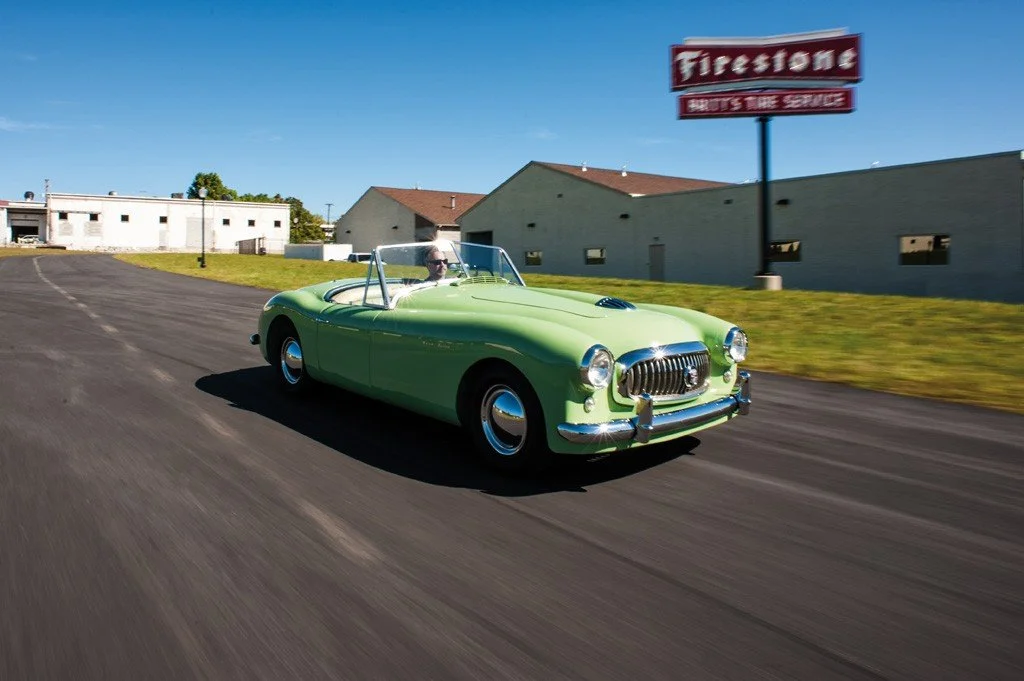 Image 9 of 13
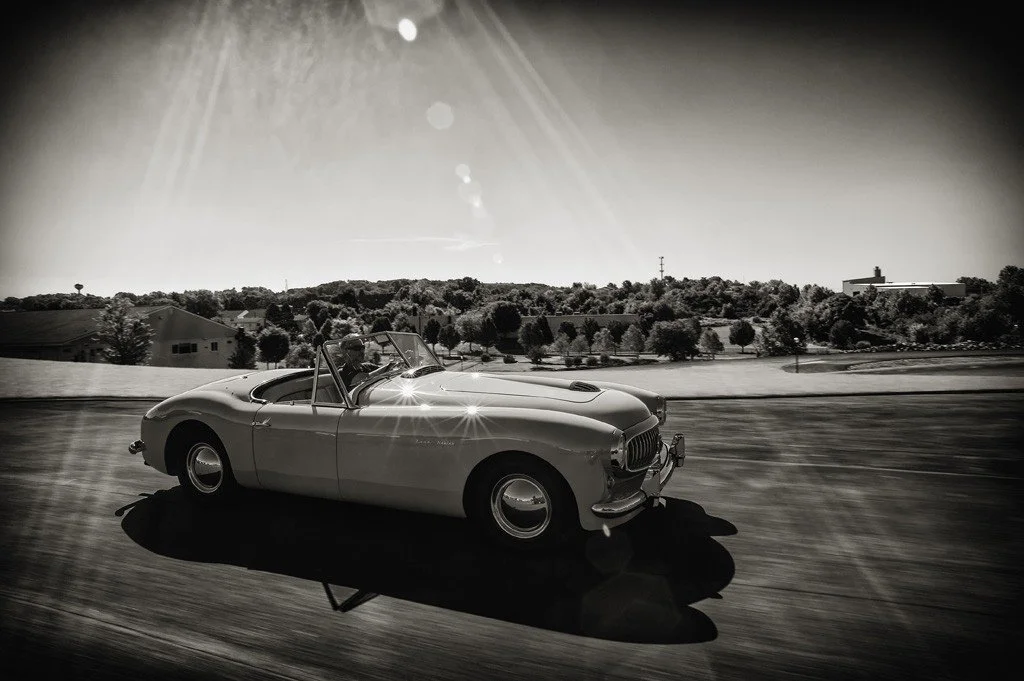 Image 10 of 13
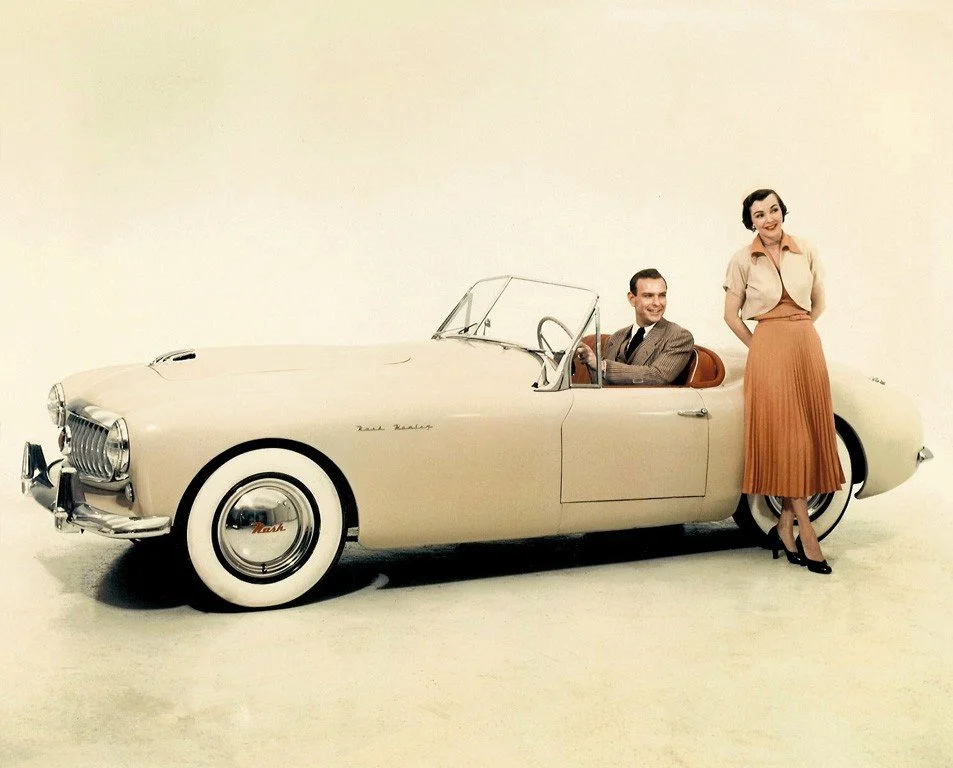 Image 11 of 13
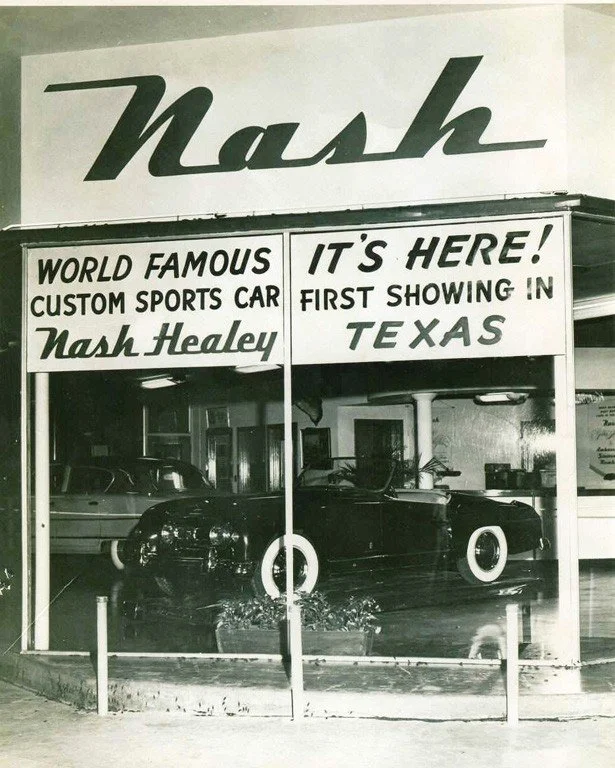 Image 12 of 13
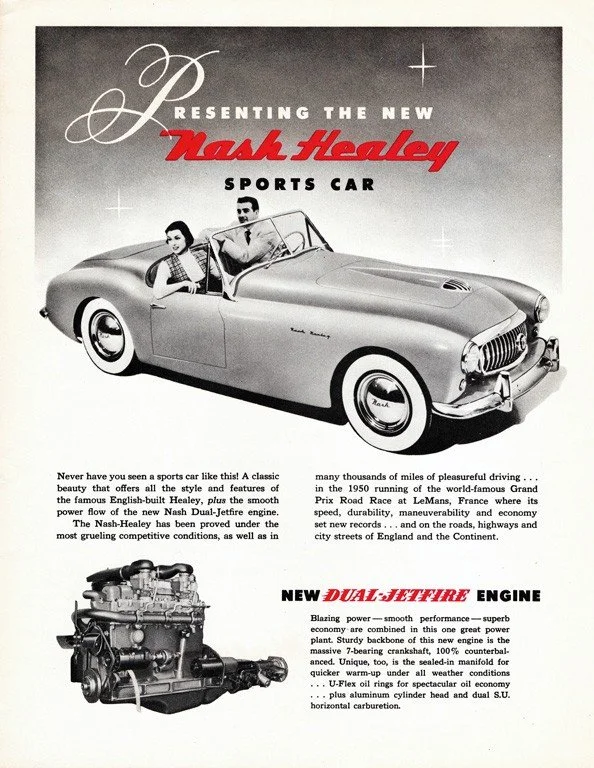 Image 13 of 13
-
Donald Healey first came to the attention of the automotive world with the Triumph Company prior to World War II. There he created their stunning knock-off of the Alfa Romeo 2300 called the Dolomite. Tight budgets at Triumph and the eventual onset of the war prevented any mass production.
After the war, Healey ventured out on his own producing cars with his bespoke chassis design, Riley 2.5 liter engines and aerodynamic bodies from various British coach builders. The Donald Healey motor company eventually made saloons (sedans), roadsters, coupes and tourers.
Healey was a racer at heart so in a quest to build ever better performing cars that could also be competitive on the track, he created a race car for the road called the Silverstone. Produced from 1949-51, these proved very fast and could easily achieve 100 mph right off the showroom floor. Briggs Cunningham took note of the success of the little Silverstone and asked Healey to build one with a Cadillac 331 cubic inch V8. This experiment proved successful enough for Healey to pursue buying more engines from General Motors.
Donald Healey boarded the Queen Elizabeth to make the trip to the United States to meet with executives at General Motors when he had a chance encounter on board with George Mason, the President of the Nash Motor Company. The two men hit it off and when Healey explained why he was going to Detroit, Mason made him an offer. If Healey couldn’t secure the engines he needed from Cadillac, Nash would supply engines. Mason recognized right away that a joint venture between the two companies could produce a halo car for Nash and a new sports car for Healey.
Cadillac was selling every car they could build and had no extra engine capacity. Healey and Mason quickly formed a partnership and the Nash-Healey sports car was born. Beating the Corvette to market by a full two years, the Nash-Healey would be the first modern American sports car produced for the American market.
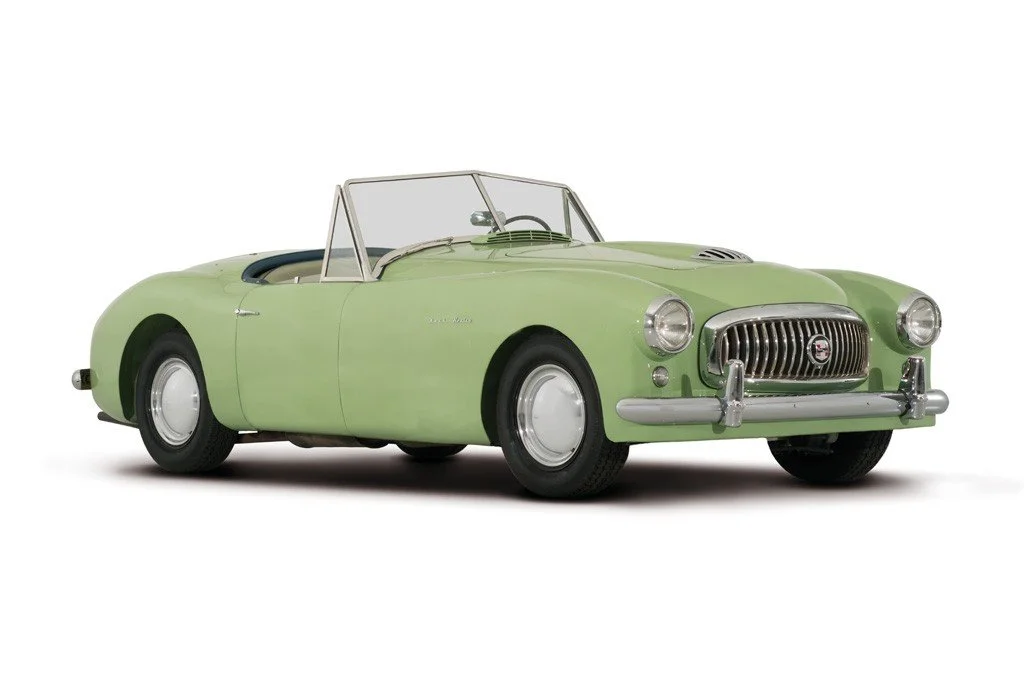
Healey penned the design of the new car himself. A prototype on a 102” wheelbase with body by Panelcraft sheet metal of England was fitted with a 234.8 cubic inch high-compression, straight-six, Nash Ambassador engine. The car was shown at the Paris Motor Show in early fall of 1950 and production began a few months later in Warwick, England. The car was to be exclusively exported to America where all 104 examples eventually found buyers. Production of this first iteration of the Nash-Healey ended in March 1951. -
Company
Nash Motors division of Nash-Kelvinator Corp
Make
Nash-Healey
Model
Nash-Healey series 25
Body Style
Roadster, 2- door
Body Manufacture
Panelcraft sheet metal
Model year
1951
Wheelbase
102 inches
Length
170.5 inches
Engine
inline-6, OHV, 234.8 cid (3.8L)
Horsepower
125 bhp @ 4000 rpm
Transmission
3-speed manual w/ overdrive
Original Base Price
$3,767 F.O.B. New York
Brand Production
205,307 model year
This Car Production
104 -
Donald Healy entered his Nash powered Healey prototype in LeMans in 1950. The car, piloted by Tony Rolt and Duncan Hamilton, placed fourth overall. In 1951, Nash-Healey returned to LeMans placing sixth overall and fourth in class. These results proved the car was a genuine sports car. In fact, the Nash-Healey is credited as the first American sports car from an American manufacturer post World War II.
The race cars used a bespoke cylinder head fitted with 3 SU carburetors. A variation of this cylinder head became available as an option for Nash cars. This car is fitted with the optional LeMans head.
Technically the Nash-Healy in 1951 came in only two colors, Champagne Ivory or Sunset Maroon. Yet, three cars are known to have been painted mint green, this being one of them.
This example was acquired by The NB Center in May, 2014 at a World Wide Auctioneers sale. The car received a thorough mechanical refurbishment after acquisition.