
 Image 1 of 12
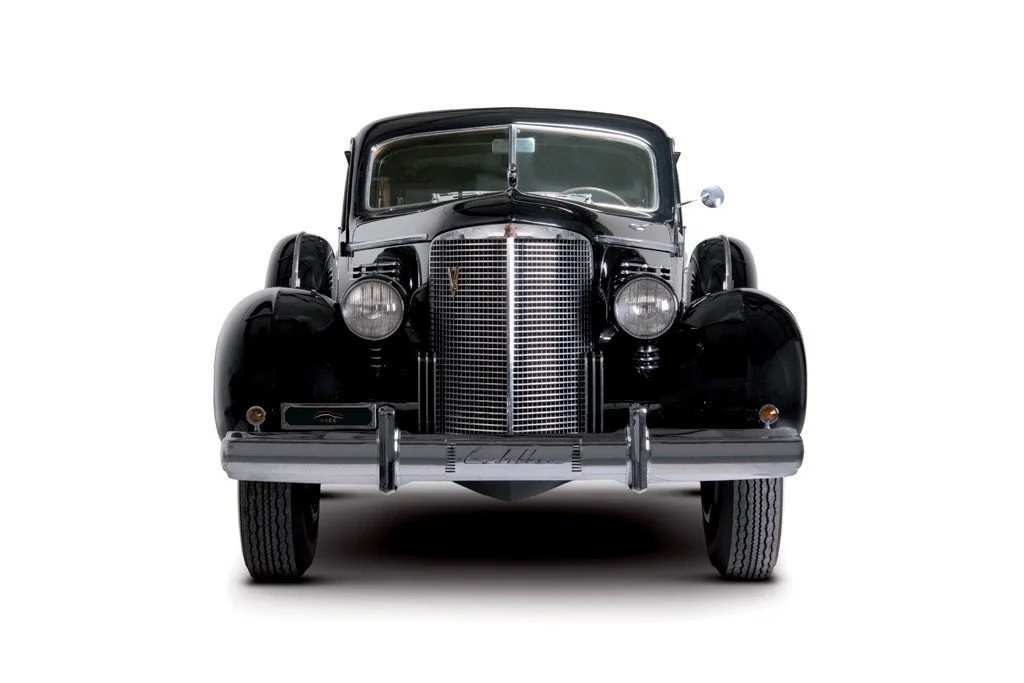 Image 2 of 12
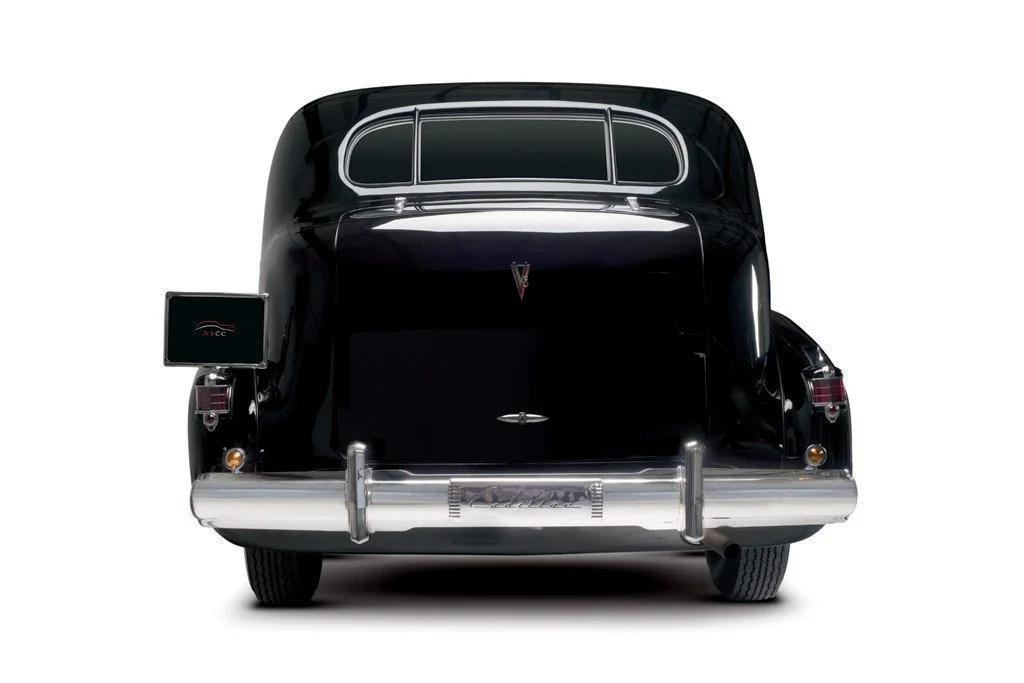 Image 3 of 12
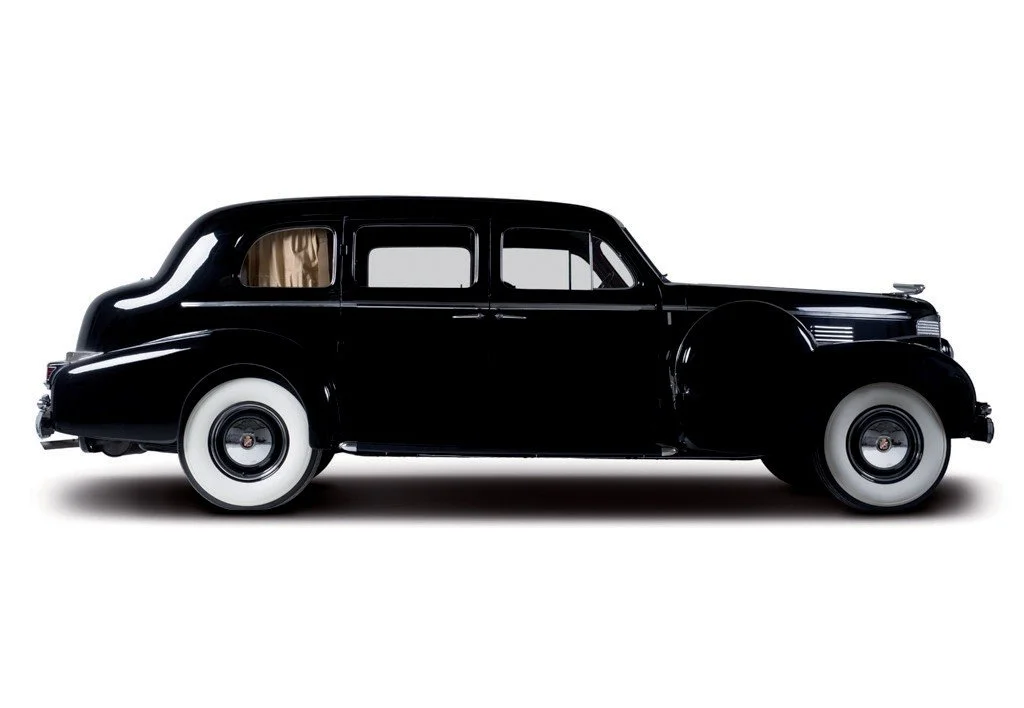 Image 4 of 12
 Image 5 of 12
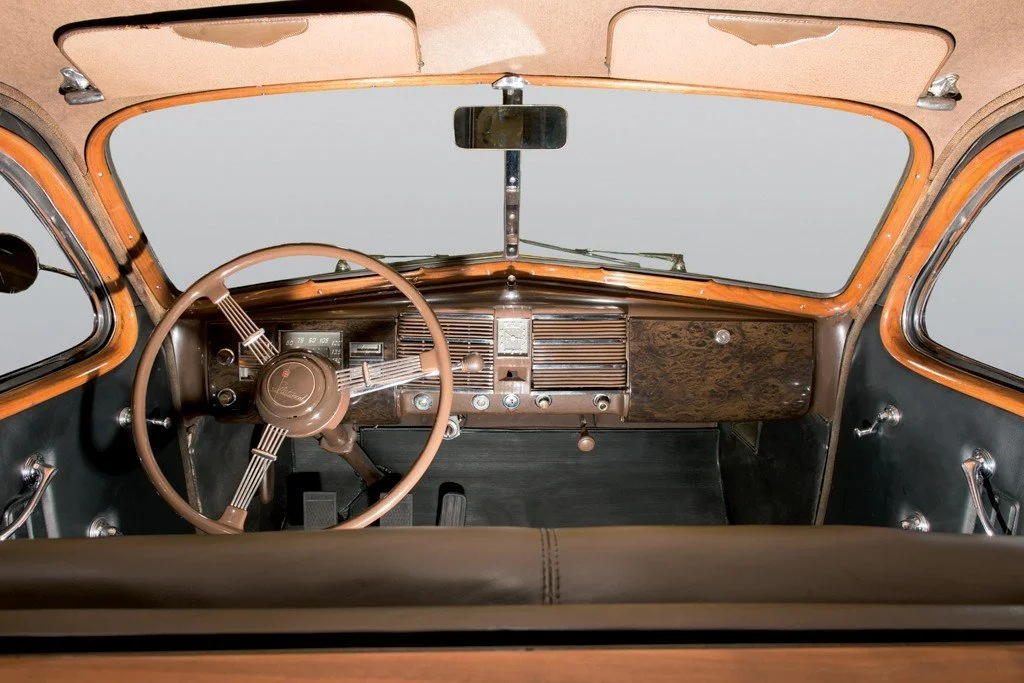 Image 6 of 12
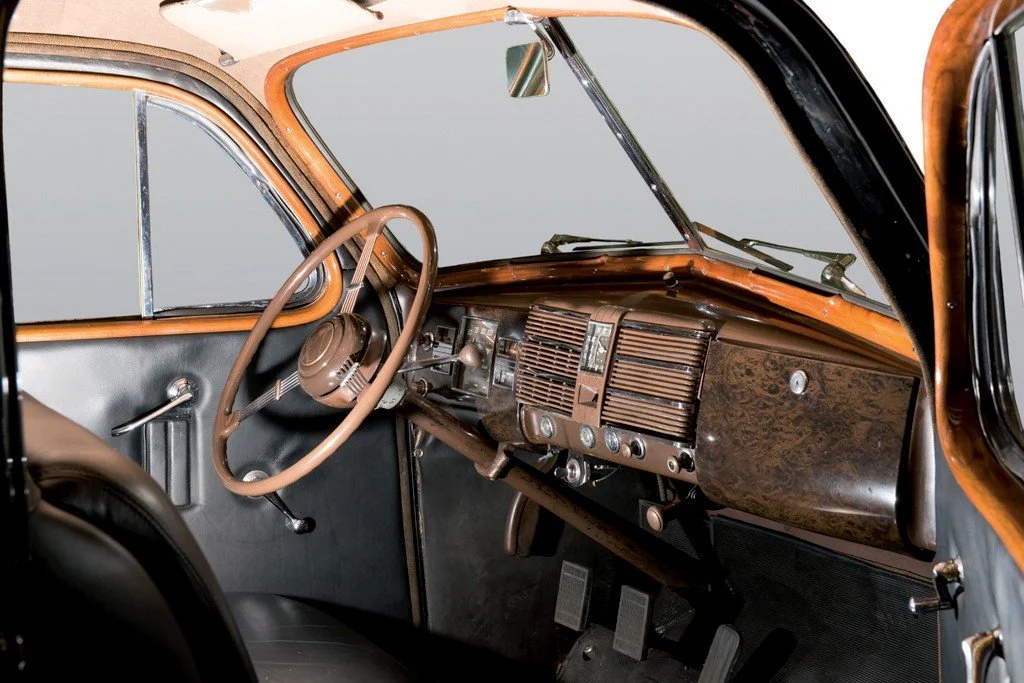 Image 7 of 12
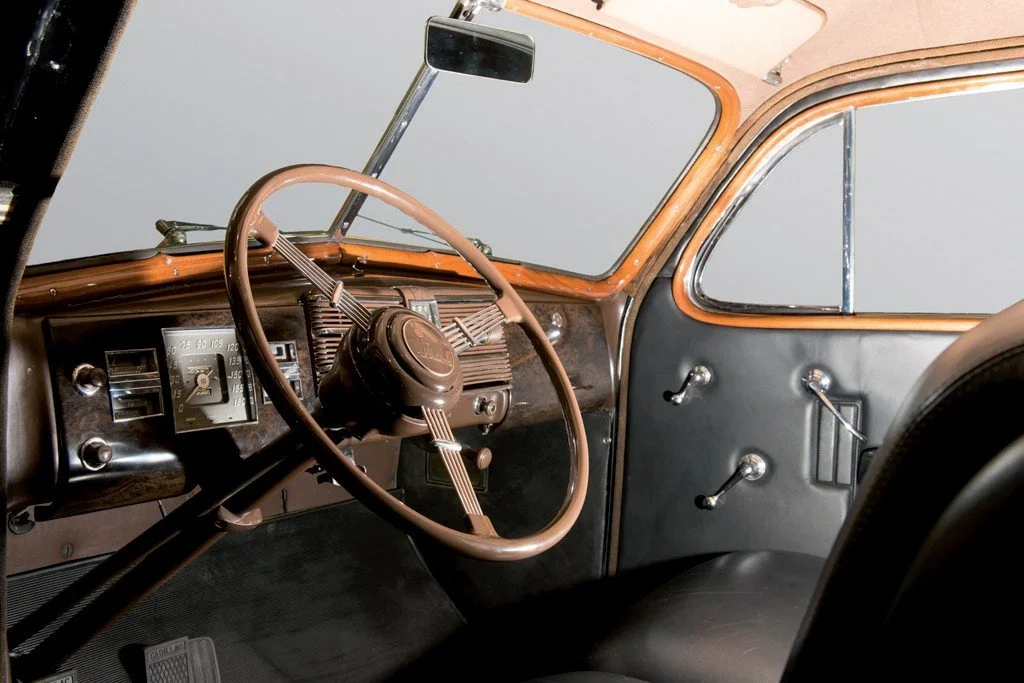 Image 8 of 12
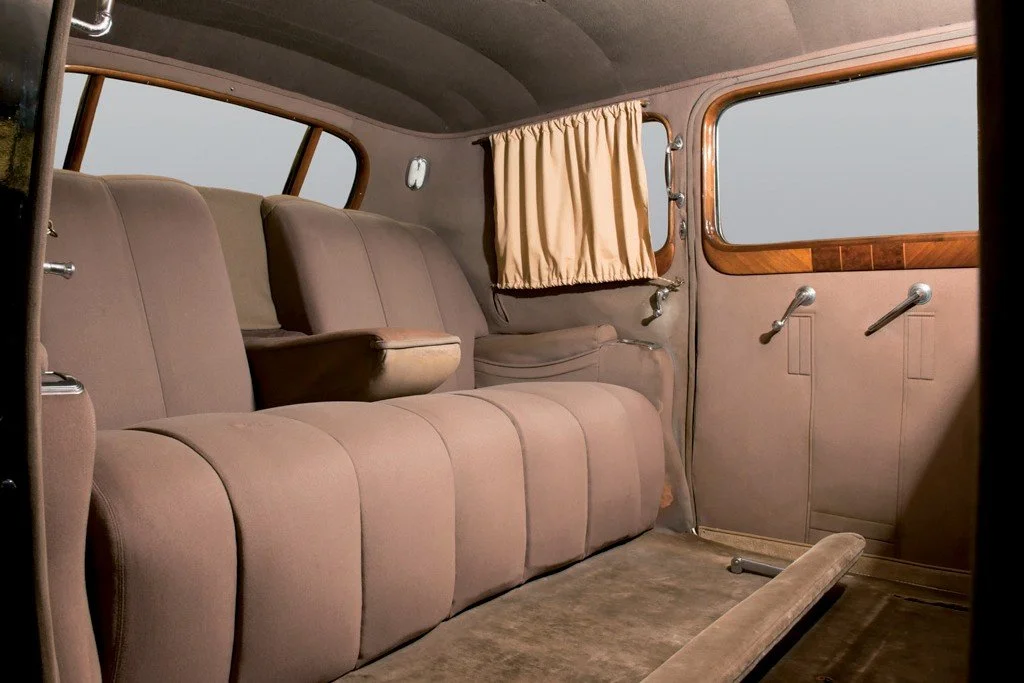 Image 9 of 12
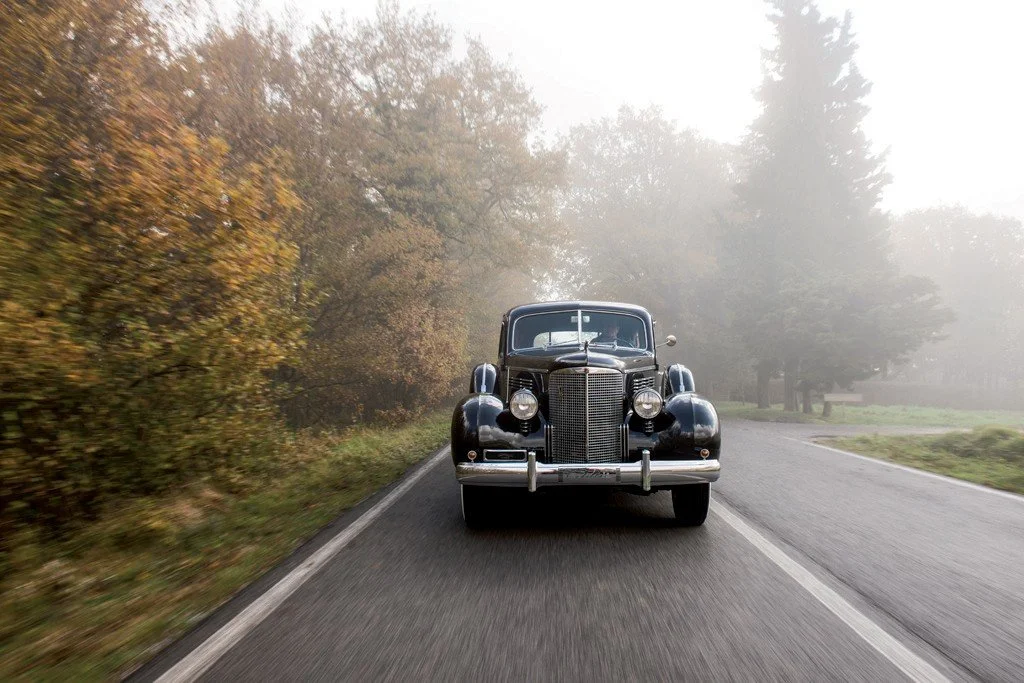 Image 10 of 12
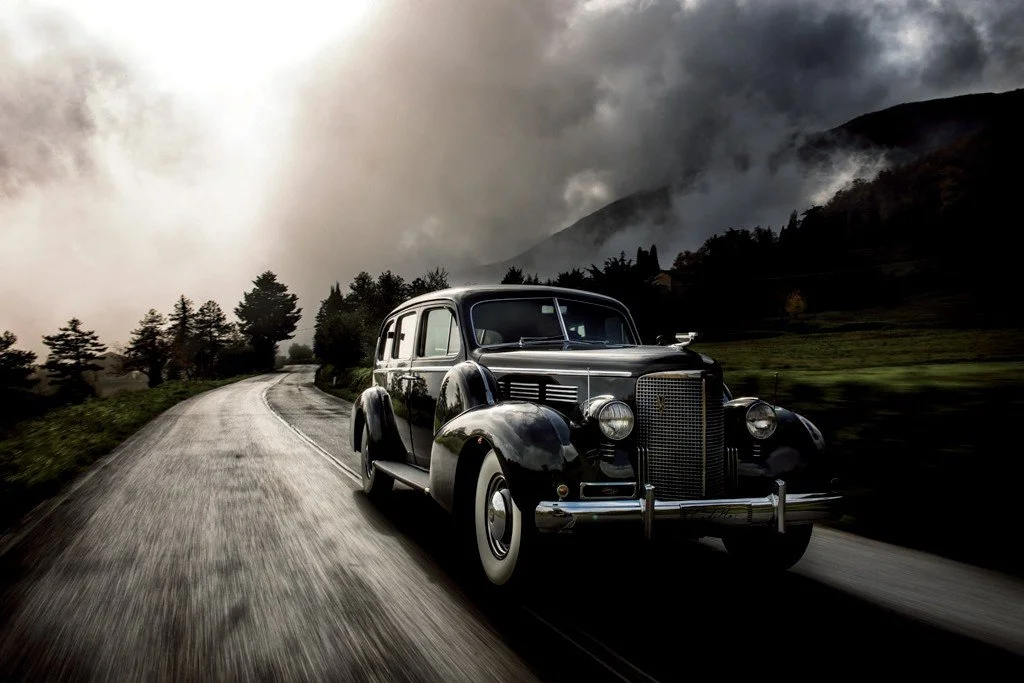 Image 11 of 12
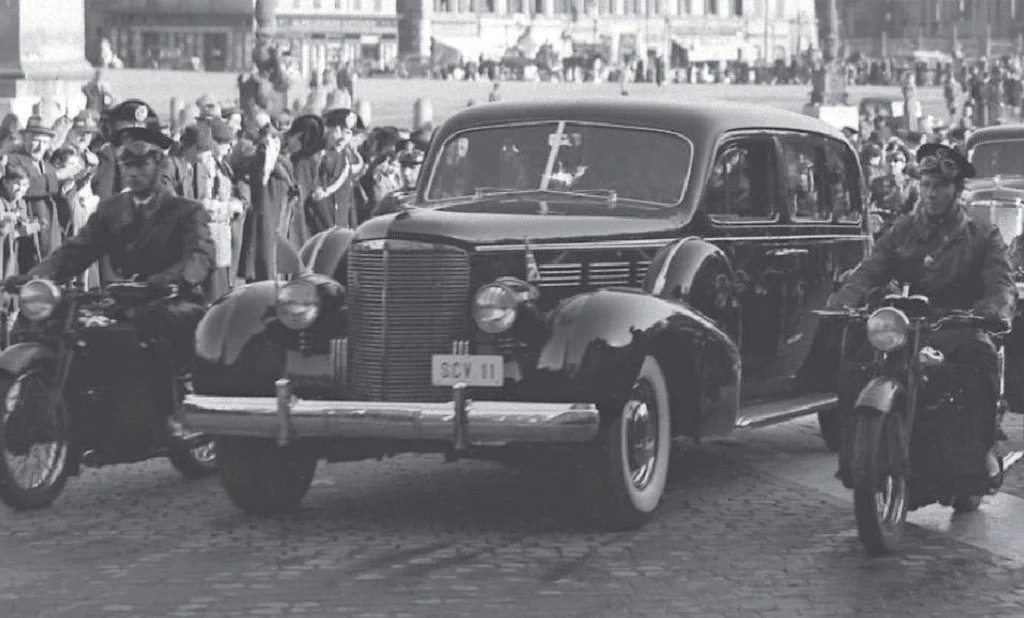 Image 12 of 12
-
The 1938 Cadillac cars debuted in October 1937. Cadillac was very hopeful that the refreshed cars of 1938 would sell well, but sales dipped below the previous year because of a sharp economic drop late in 1937. The 1938 cars were an evolution of the cars Cadillac had been building since 1936. The new features for ‘38 included column mounted shifters, horns relocated just behind the wider grille, fender-mounted headlights, a new exhaust system and the installation of improved rear axles.
The series 75 also received a higher compression version of the 346 cubic inch “flat-head” V8 engine that provided a slight boost in horsepower. This same basic engine would remain the sole offering in Cadillac cars through 1948. During the war years, Cadillac manufactured tanks and used two of these motors to power each tank.
The top of the line for Cadillac in 1938 was the V16 powered series 90. The series 75 shared the same basic chassis with a 141” wheelbase. The Imperial Touring Sedan was Cadillac’s name for the Limousine. What differentiated a Limousine from a formal Sedan was the addition of a division window between the driver and passenger compartments. -
Company
General Motors
Make
Cadillac
Model
38-7533
Body Style
Imperial touring Sedan, 4- door, 8-pass.
Body Manufacture
Fleetwood Body Co.
Model year
1938
Wheelbase
141 inches
Length
220.625 inches
Engine
V8, L-head, 346 cid
Horsepower
135 @ 3400 rpm
Transmission
3-speed manual
Original Base Price
$3,360
Brand Production
9,375 model year
This Car Production
479 -
As part of an expansion of the Vatican fleet in 1938, a pair of new Cadillac series 75 Limousines was added. Like all the cars added to the fleet that year, the Cadillacs were destined to transport dignitaries on Vatican business and official visits with the Pope.
Upon arrival at the Garage Nobile del Vaticano, the car received final preparations for its official duties and was assigned license plate SCV 11. This Cadillac is most recognizable as the car that carried British Prime Minister Neville Chamberlain and Foreign Minister Lord Halifax on their visit to Pope Pius XII in 1939 as part of their efforts to avoid war in Europe.
When the car was retired from service it was offered for sale. The Officine Tevere in Rome purchased the car, now with Italian license, Roma K68425, and subsequently resold it to a company that rented vehicles for movie production. The car changed hands several times over the following decades before becoming part of The NB Center collection in 2014. -
To understand the Vatican Limousine Collection of the NB Center you need to understand why the Vatican had American cars in the first place. In 1861, the Kingdom of Italy was created by the unification, both voluntary and forced, of the small countries and city-states that made-up the Italian peninsula. Many of the areas taken by the unification were Papal States, under the direct rule of the pope. The pope and the ruling body of the papacy, called the Holy See, retreated from these seized lands to the Leonine City on the shore of the Tiber river across from central Rome. This became the de facto headquarters of the Papacy and by extension the seat of the Catholic Church.
The new King and parliament of the Kingdom of Italy had no wish to be seen suppressing the Church or the pope, after all, the vast majority of Italians were Catholic. Through an act of the Parliament, called the “Law of Papal Guarantees”, the Kingdom of Italy granted certain powers and sovereign prerogatives to the pope. But, because this law was created by the government of the Kingdom and the pope did not recognize the rights or powers of the Kingdom, the pope did not accept this law. He declared himself a prisoner of the Leonine City, aka the Vatican, unable to leave the grounds for fear the Kingdom of Italy may seize the Vatican as their own. This stalemate, called the “Roman Question”, remained the status quo from 1861 through 1929.
The government of dictator Benito Mussolini finally negotiated an end to the Roman Question through the Lateran Pacts. This agreement, made February 1929, created the independent sovereign State of Vatican City and granted the full legal and political independence of the pope from the nation of Italy.
For the first time since 1861, the pope was free to move about outside the Vatican. Since no pope had left the Vatican since 1861, they never needed a car. While cars did exist inside the Vatican and the pope had even been given cars prior to this time, they never really had any place to go. To mark the occasion of the signing of the pact, the American Graham brothers, owners of the Graham-Paige Motor Company, donated a car to the Vatican for the use of Pope Pius XI. This 1929 Graham Paige 837 Landaulet by LeBaron became the first car for the exclusive use of a pope outside of the Vatican walls.
The car proved very reliable and comfortable. While the pope had other cars at his disposal, the Graham became the chosen vehicle. The car served both Pius XI and Pius XII before it was retired from regular use in 1947. The car can still be seen today in the Vatican museum.
In the years since the Graham entered the papal fleet, the Vatican came to appreciate that American cars were less expensive, easier to maintain and less gaudy than the offerings of most European manufacturers. In 1932, the Vatican began to purchase cars from General Motors. In that year they purchased several Buicks and a couple Cadillacs. This was followed in 1938 with the purchase of two Buicks and two Cadillacs. While other brands were purchased for various duties, all the cars dedicated to transporting dignitaries of all types, except the pope, through the end of World War II, were Buicks or Cadillacs
Immediately after the war, the Vatican placed an order for a custom Cadillac for the exclusive use of Pope Pius XII. This car was delivered in 1947 and soon followed by orders for another Cadillac, Packards and eventually Chryslers. American cars dominated the transport of dignitaries and the pope, at the Vatican until the mid-1960s.
Today, the largest collection of Vatican cars outside of the Vatican are in the NB Center collection. From a 1932 Cadillac to a 1965 Checker Marathon, including the Cadillac customized by Derham Body Company for the use of the pope starting in 1947, these cars survive because Nicola Bulgari and the staff of the NB Center set about to locate, save and preserve these artifacts while documenting their history.