
 Image 1 of 15
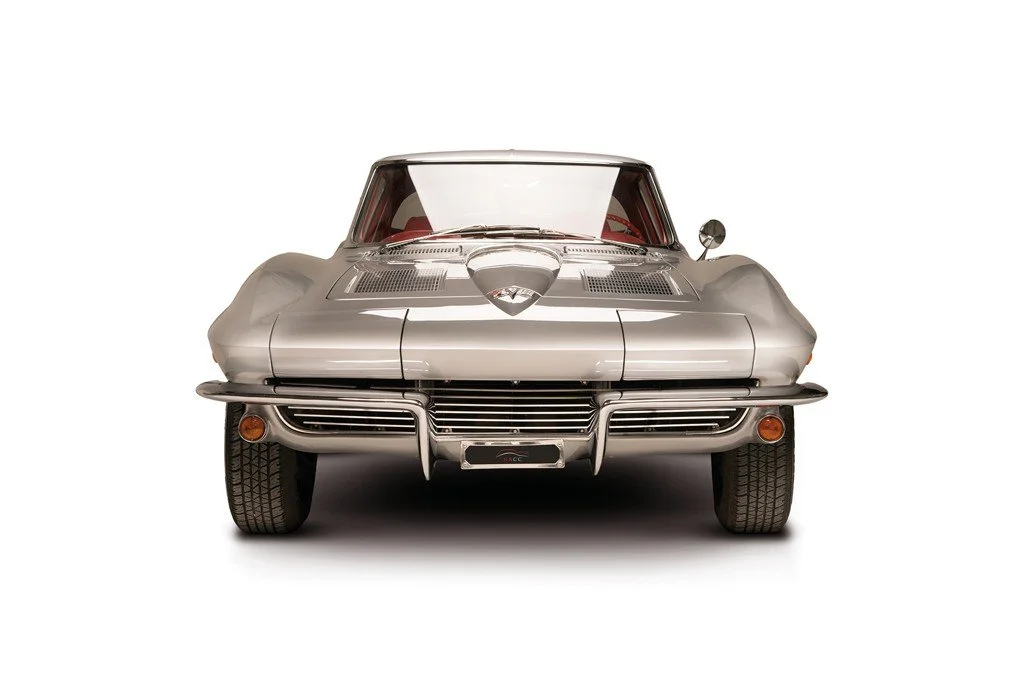 Image 2 of 15
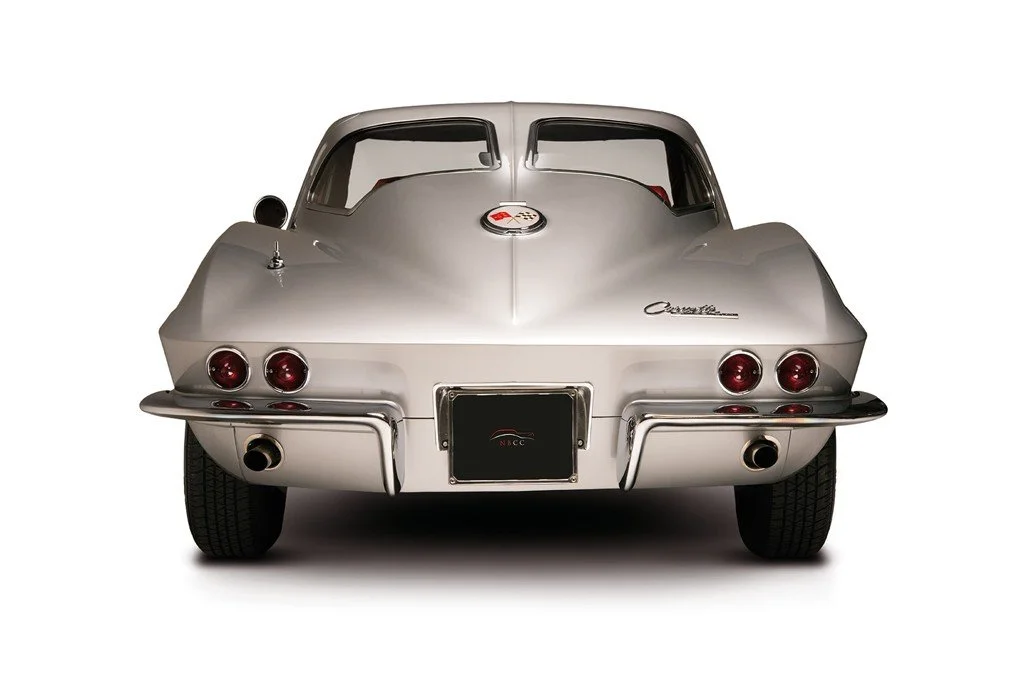 Image 3 of 15
 Image 4 of 15
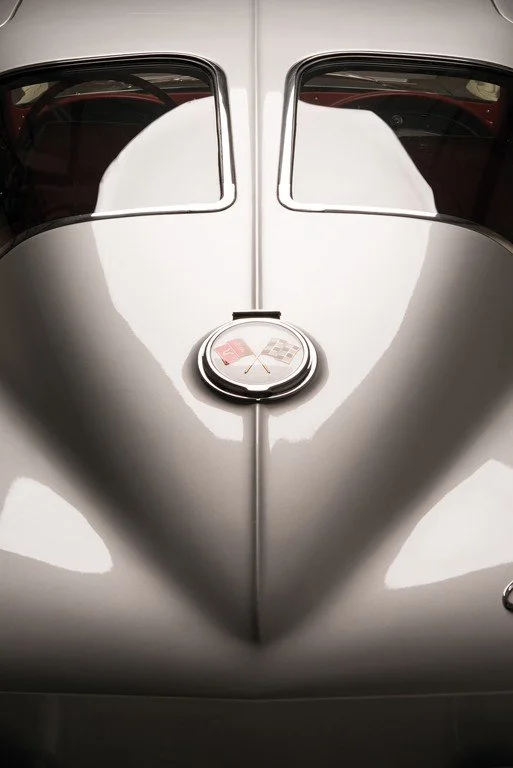 Image 5 of 15
 Image 6 of 15
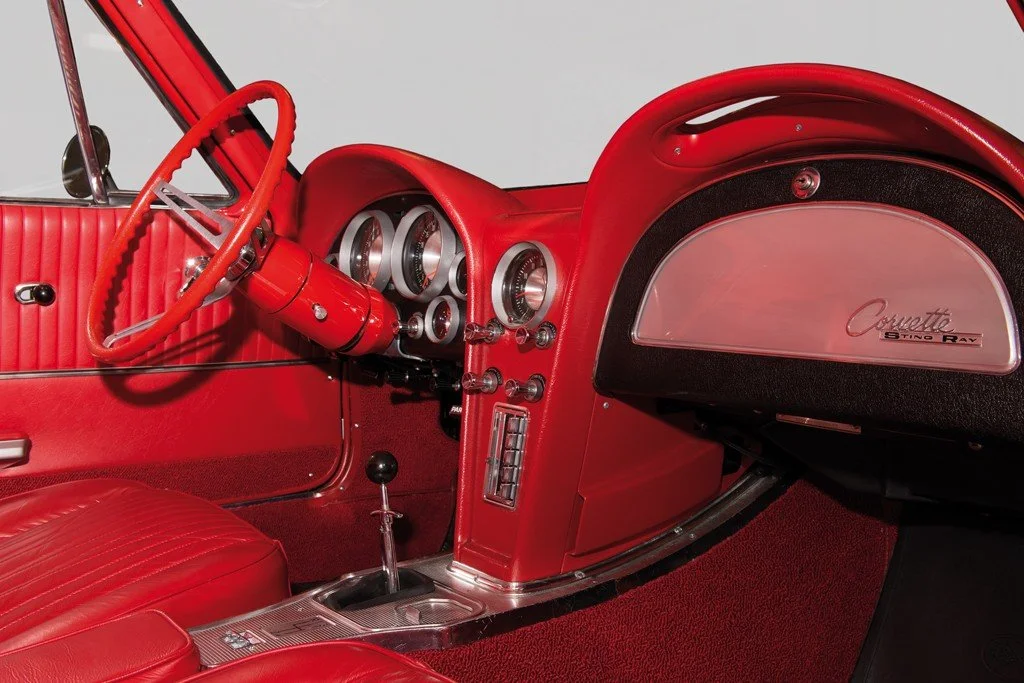 Image 7 of 15
 Image 8 of 15
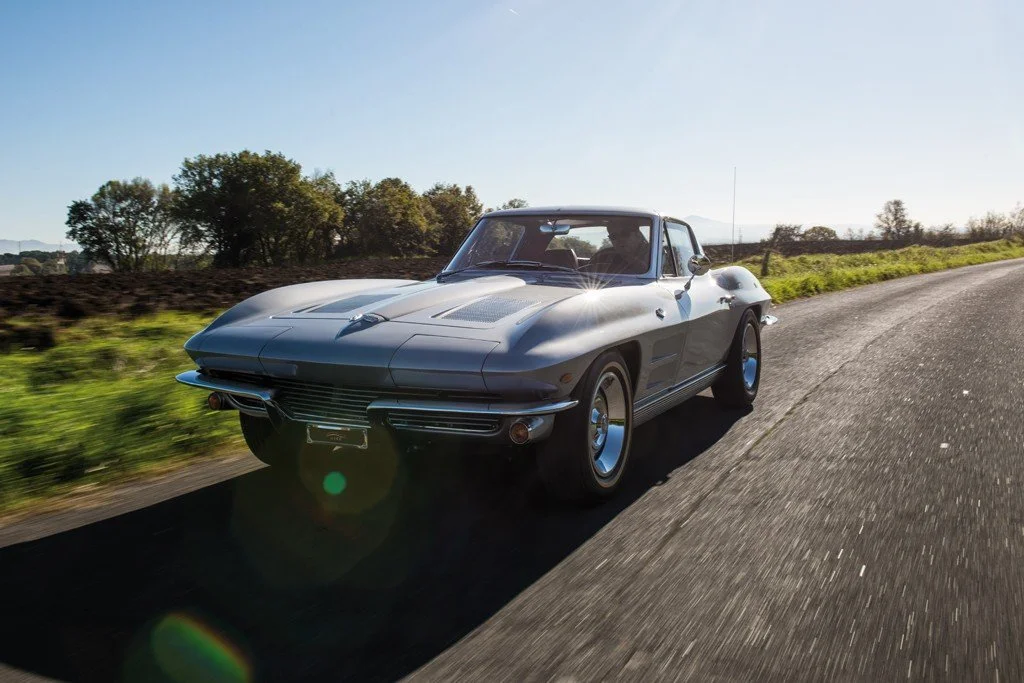 Image 9 of 15
 Image 10 of 15
 Image 11 of 15
 Image 12 of 15
 Image 13 of 15
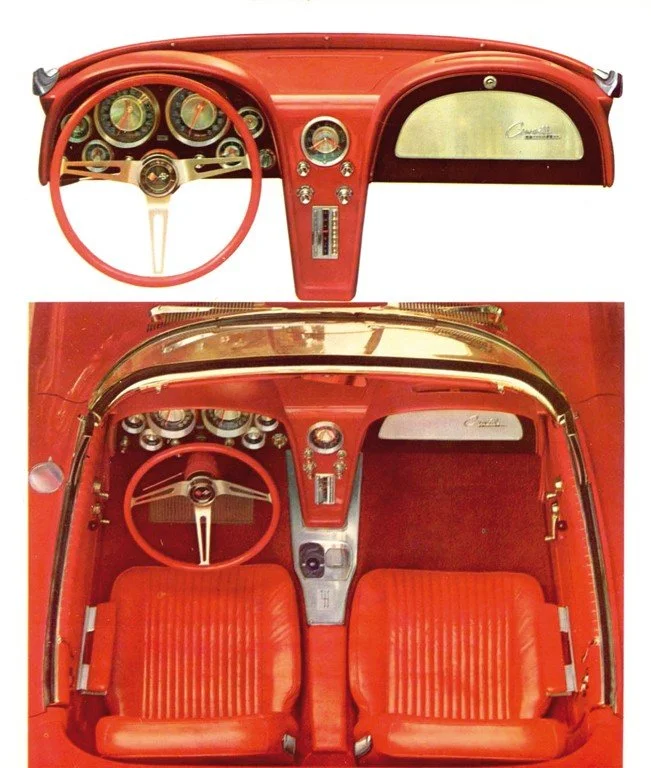 Image 14 of 15
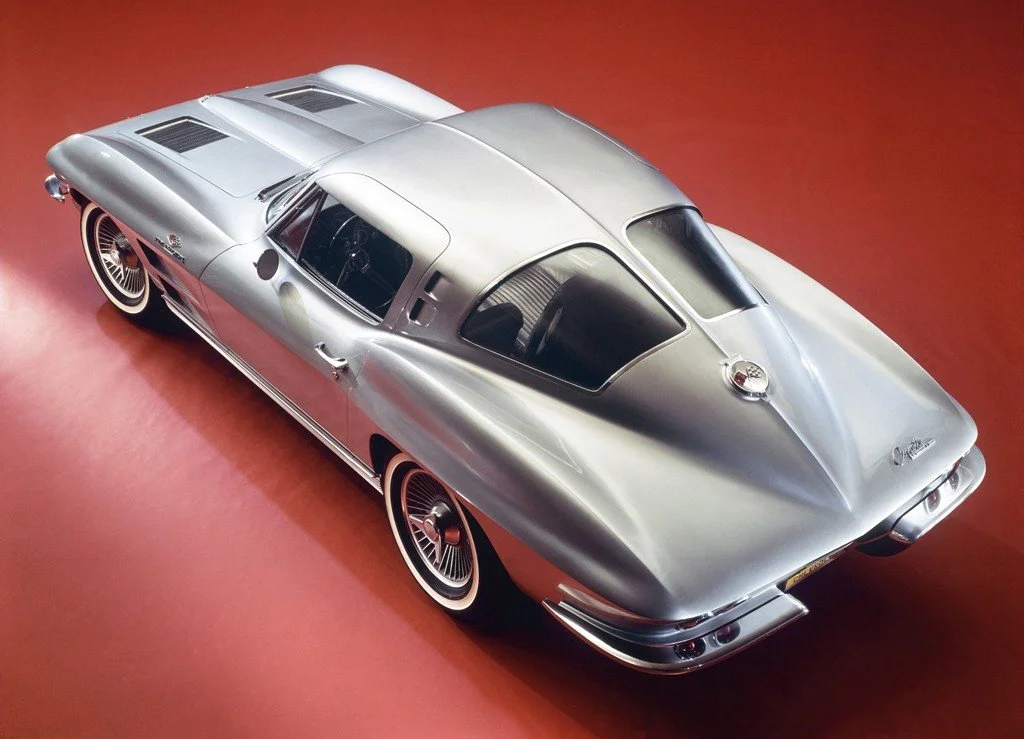 Image 15 of 15
-
The 1963 Corvette Sting Ray didn’t just appear in dealer showrooms, it burst onto the automotive scene. Gone were the soft, rounded innocence of Design Vice-President Harley Earl’s 1950s Corvette. In its place stood one guided by his successor, Bill Mitchell, looking as if it was sculpted by wind, speed, and testosterone. While utterly original, Mitchell admitted he was heavily influenced by the 1952-53 Alfa Romeo 1900 C52 “Disco Volante”.
The Sting Ray’s split rear window and fake hood vents proved polarizing, impractical and utterly perfect. It’s something that only Mitchell would've attempted, his design ability being equal parts ego and artistry. It’s the Corvette’s first total reengineering and redesign, and the first time it’s offered as a Coupe as well as a Convertible, although it would lack a trunk lid until its next makeover in 1968.
Under the hood resided Chevrolet’s 327-cubic inch V8, ranging from a modest 250 horsepower all the way up to the snarling 360-horsepower fuel-injected version. Performance is similarly varied, with 0-60 mph times of 9.1 to 5.8 seconds depending on engine tune and whether the car had a 4-speed manual transmission or 2-speed Powerglide automatic. Power brakes, power steering, power windows and air-conditioning were all optional. A fully-independent suspension was standard.
This was Zora Arkus-Duntov’s Corvette vision. Chevrolet’s Director of High Performance proved that a real American sports car needed more than chrome and cowhide. The ultimate proof of how serious the new Corvette was could be found in Regular Production Option Z06, which increased the size of the front anti-roll bar, while adding larger shock absorbers, a vacuum brake booster, a dual master cylinder and power drum brakes. For the first time, America wasn't chasing European sports cars. It was leading them.
The split-window only lasted one year and then it was gone. But icons don’t need longevity, and that is what the 1963 Chevrolet Corvette Sting Ray has become – a magnificent cultural icon. -
Company
General Motors
Make
Chevrolet
Model
Corvette
Body Style
Coupe, 2-dr., 2-pass.
Body Manufacture
Chevrolet
Model year
1963
Wheelbase
98 inches
Length
175.3 inches
Engine
V8, OHV, 327 cid / 350 cid
Horsepower
300 hp / 330 hp
Transmission
4-speed manual on the console
Original Base Price
$4,252
Brand Production
21,513 (Corvette)
This Car Production
10,594 (Coupe) -
The 1963 Corvette didn’t just make an impact in the United States, the rest of the world was also paying attention. This car was purchased in Italy by TV personality Mike Bongiorno. Bongiorno was born in the United States to Italian parents but returned to Italy prior to World War II. After the war he got into television and quickly became enormously popular mostly as a game show host.
Bongiorno used the car regularly for several decades and kept the car for the remainder of his life. He passed away from a heart attack in 2009 and the car ended up in storage. The NB Center in Italy got wind of the car's existence and tracked it down. They were able to complete a purchase in October 2011.
Still fitted with the original L75 327 cid, 300 hp engine, coupled to a M20 four-speed manual transmission, the car was complete but in need of restoration.
The decision was made to do the car as a “resto-mod” with all the changes being easily reversed. The original engine went into storage and was replaced with a 350 cid High-Output crate engine putting out 330 horsepower still matched to the original 4-speed transmission. Front brakes were updated to disks and the suspension was upgraded all around. Headrests were added to the seats and “Rally Wheels” replaced the original “Turbo Wheels”. The original color combination of Sebring Silver with Red vinyl was retained. The work was carried out in Germany by Corvette specialist Giovanni Ciccone.
Now this Split-Window Corvette provides superior performance and greater safety for piloting the roads of the Mille Miglia.