
 Image 1 of 14
 Image 2 of 14
 Image 3 of 14
 Image 4 of 14
 Image 5 of 14
 Image 6 of 14
 Image 7 of 14
 Image 8 of 14
 Image 9 of 14
 Image 10 of 14
 Image 11 of 14
 Image 12 of 14
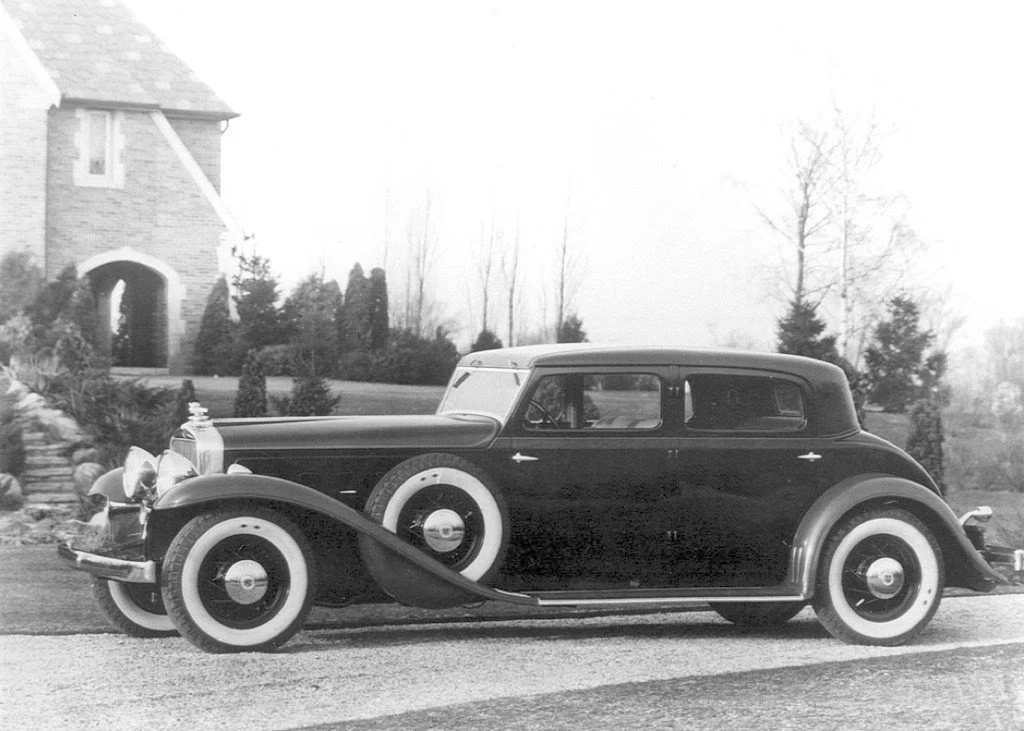 Image 13 of 14
 Image 14 of 14
-
Harry C. Stutz was determined to be in the Automobile industry. From tinkering with his own designs as a young man in his native Ohio, he drifted to Indianapolis, Indiana in 1903. There he gained valuable experience working for different component manufacturers. He eventually designed his own transaxle, a transmission incorporated into a rear axle, and set-up shop manufacturing them.
In 1911, just weeks after opening his manufacturing concern, he built a race car to compete in the inaugural Indianapolis 500. His car placed 11th. While that may not sound impressive, it was. This was all that was needed to catapult him into producing his own cars. From that time forward, Stutz would be synonymous with performance and high quality engineering.
In 1916, stock speculator Alan A. Ryan gained controlling interest in Stutz. Harry Stutz departed his namesake company in 1919. This would mark the beginning of the long downward spiral that would eventually doom Stutz.
The Stutz Vertical Eight, inline-eight cylinder engine debuted in 1926. This engine would be the basis for all engines to follow since the company could not afford to create any more from scratch. Stutz chief engineer Charles “Pop” Greuter kept improving and refining this engine. In its ultimate form, introduced in 1932, it had double overhead camshafts with four valves per cylinder on hemispherical combustion chambers. This was a very sophisticated design for the time.
The naming conventions for the engines and models reflected that Stutz could not compete in the multi-cylinder race that was raging in the late 1920’s into the early 1930’s. While companies came out with 12 and 16 cylinder engines, Stutz touted the number of valves, hoping the car buying public would not make a distinction. The inline eight with two-valves per cylinder was now called the SV-16 for Single-valve 16, while the four-valve engine would become known as the DV-32 for Dual-valve 32.
With these new engines came new more refined body styles. From a short chassis speedster called the DV-32 Super Bearcat all the way up to the top of the line European influenced Monte Carlo, which came in both SV-16 and DV-32 versions, Stutz was trying to grab whatever they could of the luxury car market. It didn’t work.
Stutz produced about 1,922 cars total in the 1930s, most of those in model year 1930. Production effectively ended in 1934, but the company didn’t announce it until the final two cars rolled out of the factory in 1935. They finally admitted their insolvency in 1937 and filed for bankruptcy.
-
Company
Stutz Motor Car Company
Make
Stutz
Model
DV-32
Body Style
Monte Carlo, 4-door, 5-pass.
Body Manufacture
Weymann American Body company
Model year
1933
Wheelbase
145 inches
Length
N/A
Engine
inline-8, DHC, 4-valve per cylinder, 321.9 cid
Horsepower
156 @ 3900 rpm
Transmission
4-speed Semi-Automatic, Self-Shifting
Original Base Price
$6,595
Brand Production
80
This Car Production
6-15 estimated over 3 years -
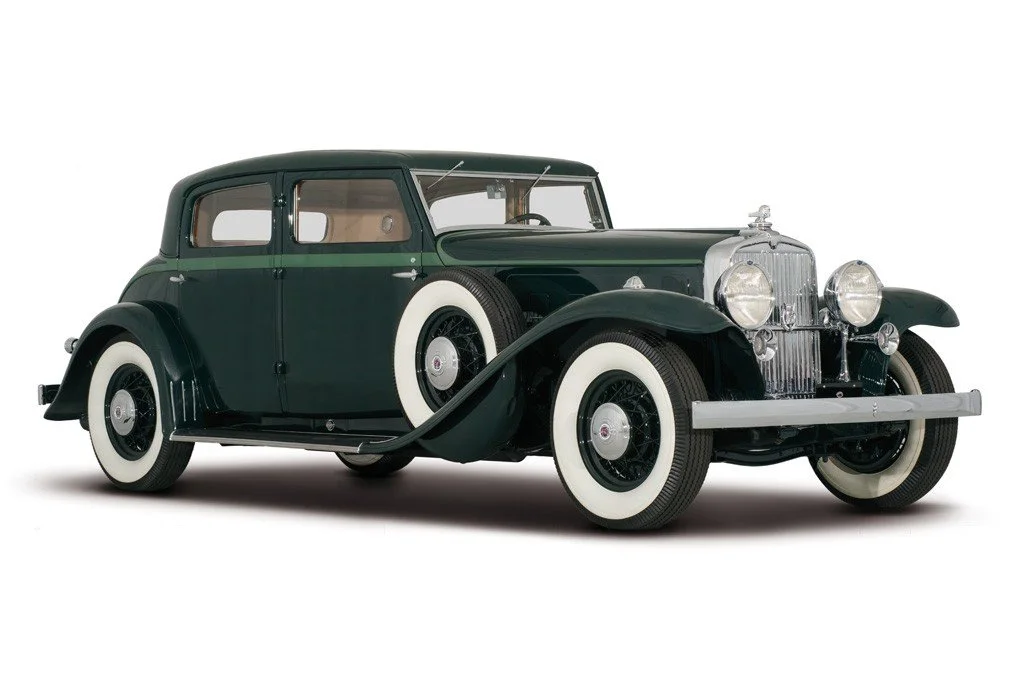
This Stutz DV-32 Monte Carlo is special even in the rarefied company of these limited production cars. It is estimated that 6-15 of these cars were produced and this one has the optional aluminum skinned body, one of only two known to exist. Designed and built by the Weymann American Body company of Indianapolis, the car has a distinctly European flair, in part, because of the French origin of the design. Frenchman Charles Weymann was famous for his patented body manufacturing technique of using hardwood framing covered in layers of cotton batting and fabric all covered in Zapron synthetic leather. His bodies were relatively light weight and very flexible, well suited to more sporting cars. But, they required a lot of tedious maintenance so the aluminum skin of this car was a $1,500 option on the already expensive $6,595 base price.
This car first appears in historical records when acquired by famed collector J.B. Nethercutt in 1959. The car was an excellent original survivor and remained with Nethercutt until he sold his entire collection to casino magnate Bill Harrah in 1962. The car remained in the Harrah collection and museum until the passing of Bill Harrah in 1978. The car then passed through the hands of several west coast collectors before arriving in the collection of William Ruger sr. of the Ruger Firearms company.
After the passing of William Ruger sr. in 2002 the car passed to his son William jr. who had noted restorer Fran Roxas do a complete restoration of the car. The car eventually moved on to noted Stutz authority Richard Mitchell.
Acquired at the RM sale in Monterey in 2015, the Stutz stands as a contrast to the varied mid-market offerings of different automobile manufacturers represented in the NB Center collection.